

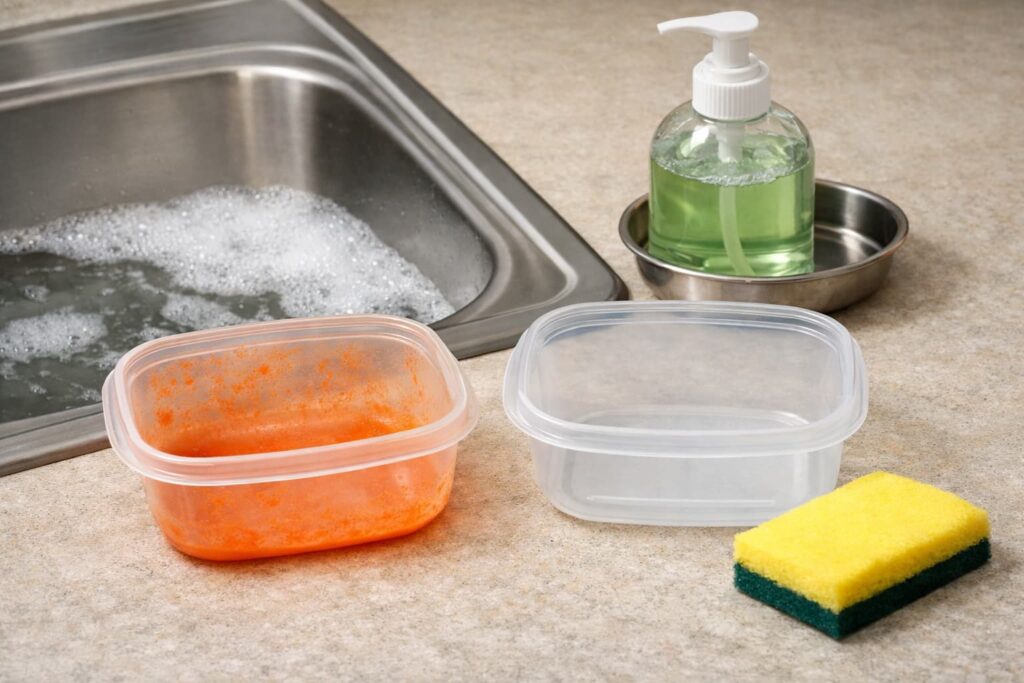
Yes—tomato stains can often be reduced or removed from Tupperware safely if you start with warm water and dish soap, avoid abrasive scrubbing, and use food-contact sanitizing steps only when they are actually needed. Tomato-based foods can stain some plastic containers, and official care guidance from Rubbermaid LunchBlox notes that reheating tomato-rich foods can make staining more likely.
If your container is only stained, it may still be usable. Michigan State University Extension says plastic food containers should be replaced when they are cracked, warped, deeply scratched, or no longer easy to clean, as explained in Keeping food safe when using plastic containers. In other words, a stain alone is not the same as damage.
Why tomato stains happen
Tomato sauce, pasta sauce, chili, curry, and other deeply pigmented foods can leave orange or red discoloration on plastic. Official Rubbermaid LunchBlox care instructions say reheating foods high in salt, oil, fat, sugar, or tomato may stain the container, while Rubbermaid Brilliance care instructions say that line is designed to resist stains from tomato-based foods. That means the food matters, but the container material matters too.
Some staining is only cosmetic. Tupperware’s own care guidance says foods such as tomato, spices, and carrots can stain certain products and that this staining may not affect product performance. That said, cosmetic staining is different from physical damage. If the container is cracked, warped, heavily scratched, or keeps odors after washing, replace it instead of continuing to use it for food storage.
Safety first before you start
Before you try to remove tomato stains from Tupperware, stay inside these basic safety limits:
- Do not mix bleach with vinegar, ammonia, or other household cleaners.
- Do not use steel wool, metal scrubbers, or sharp scraping tools on food-contact plastic.
- Do not assume every container is microwave-safe or dishwasher-safe.
- Stop using the container if it is cracked, warped, or heavily scratched.
The CDC’s bleach safety guidance says to clean first, use good ventilation, and never mix bleach with other cleaners.
What to do first
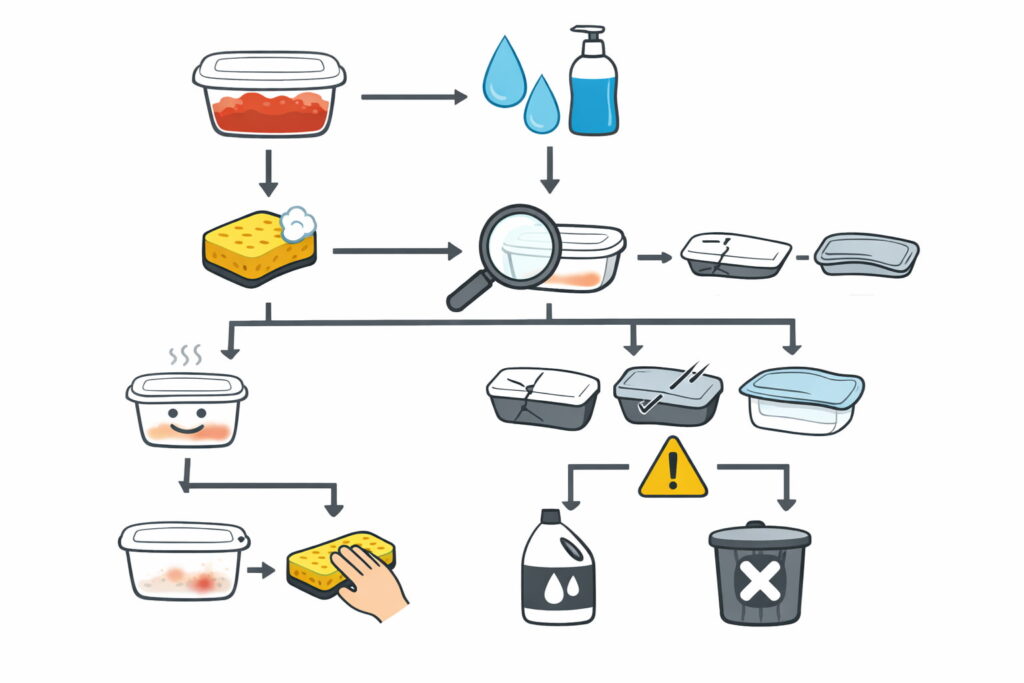
Wash with warm water and dish soap
Start with the simplest method first. Wash the container with warm water and dish soap using a soft sponge or cloth. The CDC’s cleaning and disinfecting guidance explains that cleaning is done with water, soap, and scrubbing, and that you should clean surfaces before sanitizing them.
Rinse as soon as you can
If the tomato residue is fresh, rinse the container right away. The longer the sauce sits, the more likely the stain is to set. Manufacturer care guidance warning about tomato staining supports this prevention-first step even if it does not promise full stain removal once discoloration has set.
Check for damage before you keep going
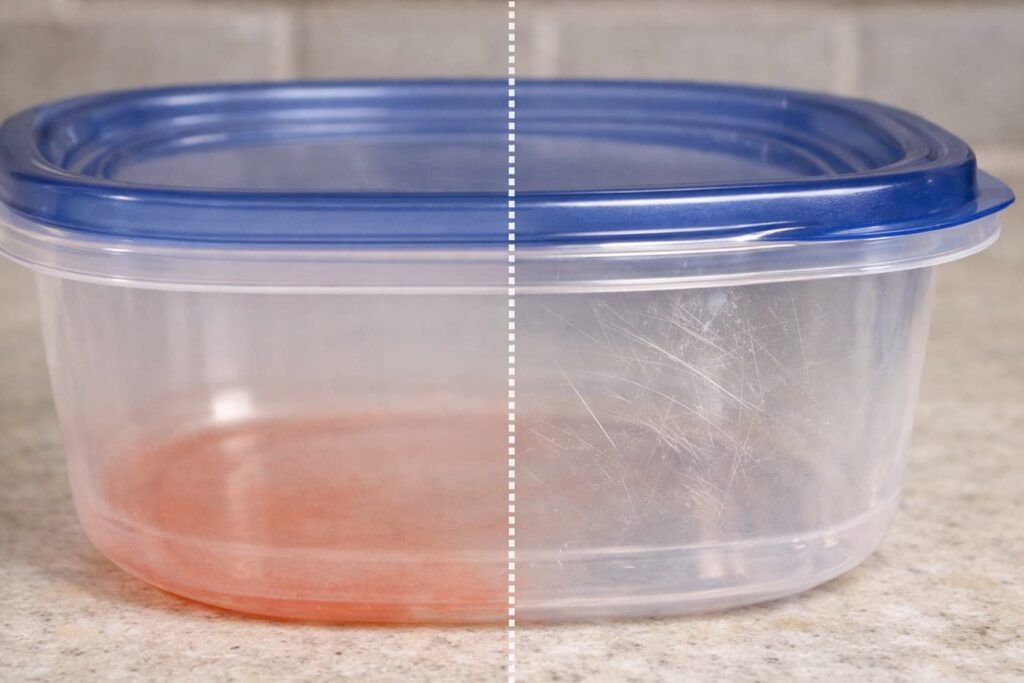
Look over the container under bright light. If you notice cracks, rough scratches, a warped shape, or a smell that does not come out after washing, replace it instead of trying harsher cleaning. Food containers should stay smooth, durable, and easy to clean.
Step-by-step safe methods
Method 1: Repeat a basic soap-and-water wash
This is the safest place to start and the best first method for most households.
- Empty the container completely.
- Rinse it with warm water.
- Add dish soap and warm water.
- Wash with a soft sponge or cloth.
- Rinse thoroughly.
- Let it air-dry and check the stain again.
This method may not remove every stain, but it follows the safest general cleaning guidance for home use.
Method 2: Use the dishwasher only if the container is labeled for it
If your specific Tupperware or plastic food container is marked dishwasher-safe, you can run it through the dishwasher after rinsing off as much tomato residue as possible first. Michigan State University Extension advises using the dishwasher only when the plastic has a dishwasher-safe label.
Do not assume this applies to every container in your kitchen. Product care rules vary by line and material.
Method 3: Sanitize only when needed
Sanitizing is not the same thing as stain removal. A container can still look stained after it has been cleaned. If you want to sanitize a food-contact container after washing it, use only food-contact-safe instructions.
The USDA’s food-contact sanitizing guidance says you can sanitize surfaces with 1 tablespoon of unscented liquid chlorine bleach in 1 gallon of water. The CDC says to clean first, ventilate the area, and never mix bleach with other cleaners.
A safe sequence looks like this:
- Wash the container with soap and warm water first.
- Mix only plain, unscented bleach with water if sanitizing is needed.
- Follow the product label directions for food-contact surfaces.
- Let the container air-dry completely before storing or using it again.
CDC home guidance also says to check with the item’s manufacturer about which sanitizing method to use when that matters for the material.
What not to do
Do not mix homemade cleaner combinations
This is the biggest safety line in the whole article. Never mix bleach with vinegar, ammonia, or another cleaner in an attempt to “boost” stain removal. The CDC warns against mixing bleach with other cleaners because dangerous gases can form.
Do not scrub aggressively
Abrasive cleaning can leave scratches that make a container harder to clean in the future. Once the inside becomes rough or damaged, replacement is a better choice than stronger scrubbing.
Do not reheat tomato foods in stain-prone plastic unless the manufacturer allows it
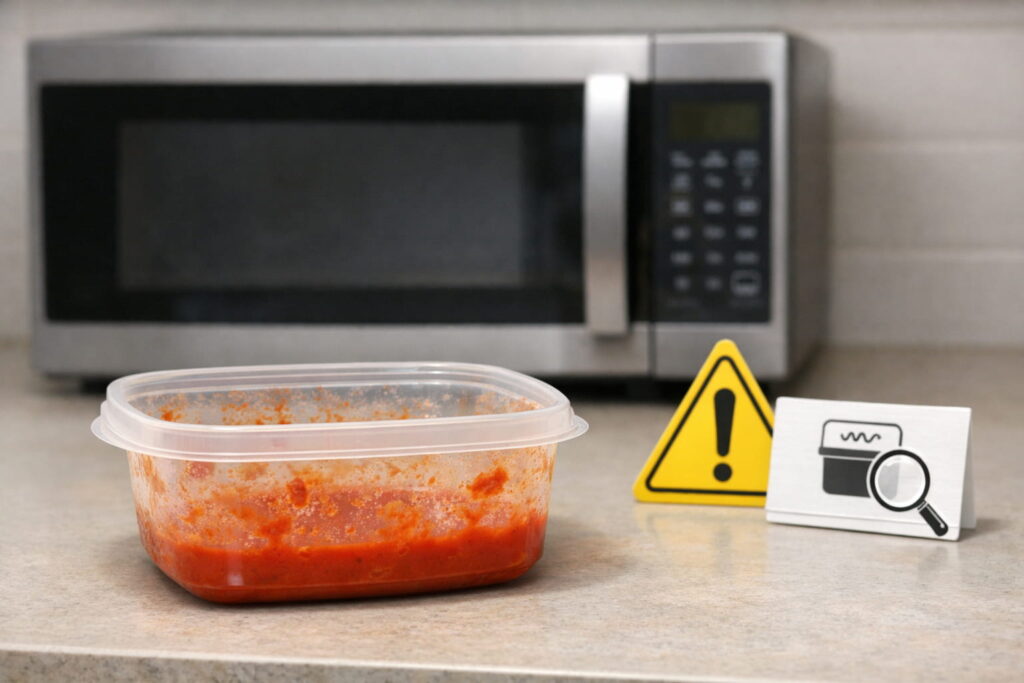
If you regularly store or reheat spaghetti sauce, curry, or chili, check the container’s use-and-care guidance first. Some plastic lines are more stain-resistant than others, and some official instructions specifically warn against reheating tomato-rich foods in certain products.
This is especially important with Tupperware because care instructions can vary by product line. Do not assume a container is microwave-safe just because it is made for food storage. Check the specific product marking or care instructions before reheating tomato sauce or other strongly colored foods.
How to prevent tomato stains next time
Rinse right after use
This is the easiest prevention step. A quick rinse removes a lot of the residue before it sits on the plastic for hours.
If you use a dishwasher, rinse off tomato residue before the container goes in. Tupperware’s care instructions specifically warn that leftover tomato-based residue can contribute to staining, including on the outside of some containers during dishwashing. A quick rinse before the dishwasher is one of the easiest ways to cut down on repeat stains.
Choose a more stain-resistant container for red sauces
If you store tomato-heavy meals often, pick a container line designed to resist staining better, or use glass for sauces and leftovers that tend to leave red or orange marks. Official product care pages show that stain resistance can vary a lot by product line.
Follow the label for microwave and dishwasher use
The safest rule is the simplest one: do only what the product’s care instructions allow. That helps with both stain prevention and container longevity.
When to stop and replace the container
Stop trying to save the container if you see:
- cracks
- rough interior scratching
- warped sides or lid area
- a damaged seal
- stubborn odors after washing
- a surface that no longer looks smooth and easy to clean
For food storage, a damaged container is a bigger issue than a cosmetic stain.
Quick answer: what works best?
For most people, the best method is:
- Wash with warm water and dish soap.
- Rinse promptly after tomato-based foods in the future.
- Use the dishwasher only if the container is labeled for it.
- Sanitize only when needed, using food-contact-safe directions.
- Replace damaged containers instead of scrubbing harder.
If the container is otherwise smooth, odor-free, and undamaged, a faint leftover tint may be better treated as a cosmetic issue rather than something to keep scrubbing aggressively. Chasing a light stain with harsher methods can do more harm to the plastic than the stain itself.
Helpful videos
Under “Wash with warm water and dish soap”
This CDC-aligned cleaning video supports the clean-first approach before any stronger sanitizing step.
Under “Sanitize only when needed”
This Oklahoma Cooperative Extension video is useful for the sanitizing section because it shows safe bleach-sanitizer preparation instead of improvised cleaner mixing.
This kitchen sanitizing video helps reinforce the article’s food-contact-surface guidance and the difference between cleaning and sanitizing.
FAQs
Can tomato stains make Tupperware unsafe?
Not by themselves. A cosmetic stain is different from physical damage. The real concern is whether the container is cracked, scratched, warped, or no longer easy to clean.
Can I use bleach to remove tomato stains from Tupperware?
Bleach is better treated as a sanitizing option, not a primary stain remover. Clean first, then sanitize only if needed, and always follow food-contact directions.
Is it okay to microwave tomato sauce in plastic containers?
Only if the specific container is approved for that use. Some official care instructions say reheating tomato-based foods may stain certain plastic containers.
Why do some containers stain more than others?
Different plastics and product lines handle tomato pigments differently. Some official product lines are marketed as more stain-resistant than others.
Should I throw away a stained container?
Not just because it is stained. Replace it if it is damaged, warped, or keeps odors after washing.
What is the safest first step?
Warm water, dish soap, and a soft sponge or cloth. Clean first before thinking about sanitizing.
Conclusion
Tomato stains on Tupperware are common, and the safest fix is usually a basic one: wash early, stay non-abrasive, and only use food-contact sanitizing steps when they are actually needed. If the stain is only cosmetic, the container may still be fine. If the plastic is damaged, warped, or hard to clean, replacement is the safer move. Build the habit of rinsing tomato residue quickly, and you will prevent a lot of these stains before they set.
Sources / References
Tupperware official product care information
https://www.tupperware.com/
Rubbermaid Use & Care Instructions — LunchBlox
https://help.rubbermaid.com/s/article/Use-Care-Instructions-Rubbermaid-LunchBlox
Rubbermaid Use & Care Instructions — Brilliance Product Line
https://help.rubbermaid.com/s/article/Use-Care-Instructions-Rubbermaid-Brilliance-Product-Line
CDC Cleaning and Disinfecting with Bleach
https://www.cdc.gov/hygiene/about/cleaning-and-disinfecting-with-bleach.html
CDC Cleaning and Disinfecting
https://www.cdc.gov/hygiene/cleaning-disinfecting/index.html
CDC When and How to Clean and Disinfect Your Home
https://www.cdc.gov/hygiene/about/when-and-how-to-clean-and-disinfect-your-home.html
USDA Ask USDA — How do you sanitize surfaces?
https://ask.usda.gov/s/article/How-do-you-sanitize-surfaces
Michigan State University Extension — Keeping food safe when using plastic containers
https://www.canr.msu.edu/news/keeping_food_safe_choosing_food_storage_containers