

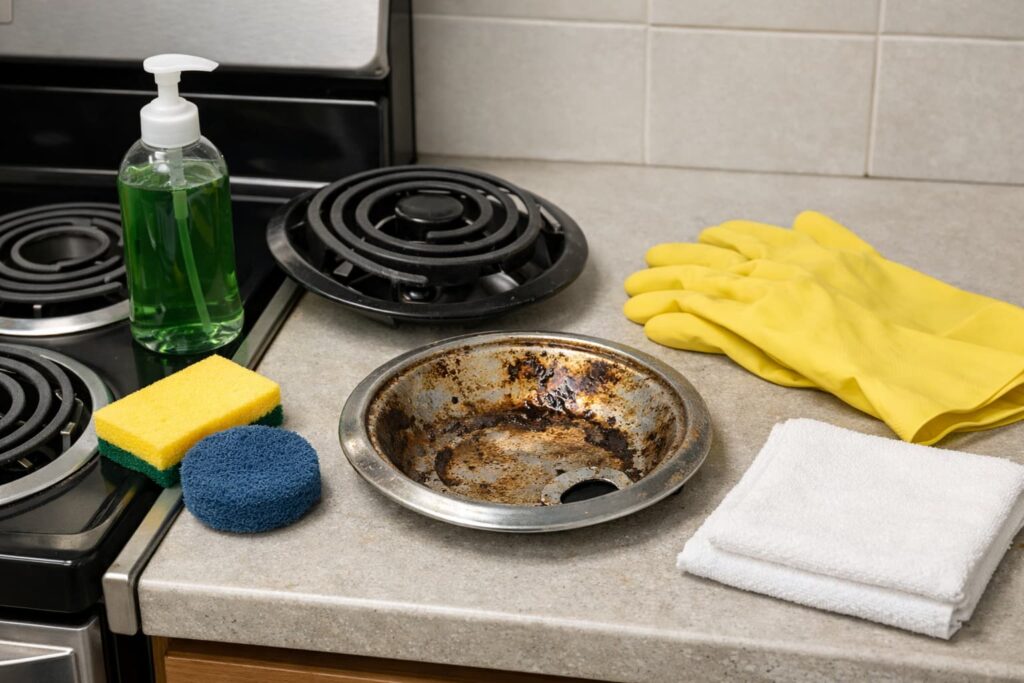
The safest way to clean stove drip pans is to let the stove cool completely, remove the pans if your model allows it, wash with hot soapy water first, and only use a stronger method if the pan finish and your manufacturer’s guidance allow it. That approach works for most grease and helps you avoid scratching chrome, dulling porcelain, or using a chemical method your stove parts were not meant to handle.
If you are dealing with heavy, baked-on grease, the best method depends on whether your drip pans are chrome, porcelain, or aluminum. That matters because cleaning rules are not identical across finishes. This guide walks through the safest homeowner-friendly approach, what to avoid, and when replacement is smarter than more scrubbing. Keeping the stovetop clean also matters for fire prevention, as the U.S. Consumer Product Safety Commission stove safety guidance advises keeping cooking surfaces free of grease buildup.
Quick Checks First
- Let the stove cool fully before touching anything.
- Remove the drip pans only if your model uses removable pans.
- Start with hot soapy water and a soft sponge.
- Dry the pans completely before reinstalling them.
- Use ammonia, dishwasher cleaning, oven cleaner, or self-clean methods only when your pan finish and owner’s manual support them.
- Never mix bleach with ammonia or other cleaners.
- Replace drip pans that are warped, flaking, heavily rusted, or no longer fit correctly.
First, make sure your stove actually has removable drip pans
This guide applies to electric-coil stoves with removable drip pans under the burners. If you have a smooth-top radiant or induction cooktop, you do not clean drip pans because those models use a flat cooktop surface instead. In that case, stop here and follow the cleaner and material guidance for your glass or ceramic cooktop rather than trying to lift parts that are not designed to come out. GE Appliances electric cooktop guidance shows that radiant smooth-top and induction cooktops use a different cleaning approach.
Before You Start
Make sure all burners are off and the stove is completely cool. Clear the area and work with only basic, safe cleaning tools first.
What you will need
- Dish soap
- Warm water
- Soft sponge or cloth
- Non-scratch scrubber
- Gloves
- Dry towel
For heavier grease, some brands also allow an ammonia-based soak, dishwasher cleaning for certain finishes, or oven cleaner used exactly as directed. The safest rule is to start gentle and check the owner’s manual before moving up to a stronger method. Whirlpool Product Help — Burner or Drip Bowls, Electric Range and GE Appliances — Range Cleaning Chrome Drip Pans and Trim Rings are both useful examples of why finish-specific instructions matter.
Safety First Before You Clean Stove Drip Pans
Do not clean drip pans while they are still hot. Do not soak the electric coil elements themselves. Do not assume every drip pan is dishwasher safe or self-clean safe.
If you use ammonia or any stronger cleaner, ventilate the kitchen and wear gloves. The CDC bleach safety guidance says never to mix bleach with ammonia or other cleaners. The CDC ammonia fact sheet warns that ammonia fumes can irritate the eyes, throat, lungs, and skin.
Stop and call a pro if you notice
- Sparking
- A burned wire smell
- Melted burner receptacles
- Damaged coil terminals
- Cracked insulation
- Loose or scorched electrical connections
Cleaning removable pans is a normal homeowner task. Repairing damaged burner connections is not.
What Kind of Stove Drip Pans Do You Have?
This is the first question to answer before you pick a method.
Chrome drip pans
Chrome drip pans scratch more easily than many people expect. GE says not to use abrasive cleaners or steel wool on chrome because they can damage the surface. Whirlpool allows a stronger scrub method for some chrome bowls after an ammonia soak, which is exactly why checking your model guidance matters. For a general cleaning article, the safer cross-brand advice is to avoid abrasives on chrome unless your owner’s manual clearly says otherwise.
Porcelain drip pans
Porcelain drip pans are often easier to clean. Whirlpool says porcelain drip bowls are dishwasher safe. Some GE guidance also allows certain porcelain pans in the self-clean oven, but that should still be treated as model-dependent rather than universal.
Aluminum drip pans
Aluminum drip pans may be hand-washed, dishwasher cleaned, or self-cleaned on some models, according to GE guidance, but discoloration or warping can happen. That makes aluminum a finish where “allowed” does not always mean “best-looking afterward.”
How to Clean Stove Drip Pans With Soap and Water
For normal grease, this is the best place to start.
1) Let the stove cool completely
Do not remove anything while the burner area is warm.
2) Remove the coil and drip pan carefully
On many electric-coil stoves, you gently push the coil toward the receptacle, lift it enough to clear the bowl, pull it away from the receptacle, and then lift out the drip pan. If your setup looks different, stop and use your owner’s manual instead of forcing the part.
3) Shake or wipe out loose debris
Dump crumbs and dry flakes into the trash first. This makes the wash step easier.
4) Wash with hot soapy water
Use warm water, dish soap, and a soft sponge or cloth. For many households, this is enough to remove oily film and newer splatters without risking finish damage.
5) Rinse well
Leftover soap can leave residue that bakes onto the pan later.
6) Dry completely before reinstalling
Dry the pans fully with a towel before putting them back under the burner. Do not reinstall damp parts.
Helpful video
This GE Appliances video is useful for seeing drip bowl positioning and reinstall orientation, which helps readers avoid forcing the pan back into place.
How to Remove Burnt-On Grease From Stove Drip Pans
If soap and water did not do enough, move up carefully.
Option 1: Use a manufacturer-approved ammonia soak
Whirlpool says chrome bowls can be soaked in a solution of 1/2 cup ammonia to 1 gallon of water for 20 minutes, then scrubbed if needed and dried thoroughly. GE gives a different heavy-soil method for chrome drip pans: place the pan with 1/4 cup of ammonia in a plastic bag or container, let it sit overnight, then rinse and polish with a soft cloth.
Because those directions differ, the safest general advice is:
- Use ammonia only if your finish and manual allow it
- Ventilate the room well
- Wear gloves
- Never mix ammonia with bleach or any other cleaner
- Rinse thoroughly before reinstalling
Option 2: Dishwasher cleaning for approved pans
Whirlpool says porcelain drip bowls are dishwasher safe. GE says some chrome and aluminum drip pans may also be dishwasher safe. Since that varies, the best rule is to verify the finish and manual before loading them into the dishwasher.
Option 3: Self-clean oven method for limited cases
Some GE guidance allows certain aluminum or porcelain drip pans in the self-clean oven, but it also warns that discoloration or warping can happen. GE specifically says chrome drip pans should not be cleaned in the self-cleaning oven because they can warp and discolor. Treat this as a limited, model-specific option rather than a go-to method.
Option 4: Oven cleaner only when both the label and your manual support it
Whirlpool says oven cleaner can be used by following the product label instructions. That is not a blanket recommendation for every pan. Use oven cleaner only when your part finish and the cleaner label both support it.
What Not to Do
Do not mix cleaning chemicals
This is the biggest hard stop. Never combine bleach with ammonia or other cleaners. Use one method at a time, rinse well, and start fresh if you switch products.
Do not use steel wool on chrome as a default
This is where official guidance differs. Some Whirlpool guidance permits a stronger scrub method on certain chrome bowls, but GE says not to use steel wool or abrasive cleaners on chrome drip pans. The safest general recommendation is to avoid steel wool on chrome unless your exact model guidance allows it.
Do not force stuck burner parts
If the coil does not release easily, stop. Check the owner’s manual rather than forcing the connection.
Do not reinstall wet parts
Dry everything completely before reassembly.
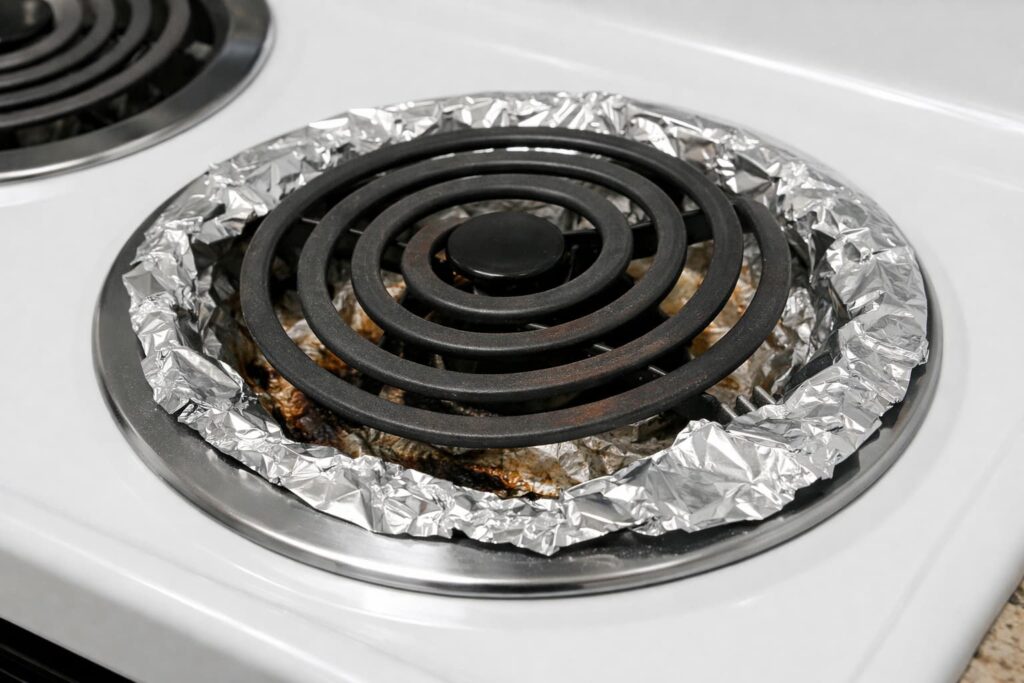
Do not line drip pans with aluminum foil
Do not cover drip pans with foil to “keep them clean.” GE says foil can trap heat or melt, which can damage the range and create a shock or fire hazard. If cleanup is no longer realistic, replacement is the better option than lining the pans. GE Appliances — Range & Wall Oven: Using Aluminum Foil or Silicone Liners
Helpful video
This FEMA video reinforces the chemical-safety point that dangerous fumes can result when bleach is mixed with ammonia or other cleaners.
When Cleaning Is Not Enough
Sometimes the better fix is replacement.
Replace the drip pans if you see:
- Warping
- Deep rust
- Flaking finish
- Permanent blackened damage
- Heavy pitting
- A poor fit after cleaning
At that point, more scrubbing usually gives you worse results and more frustration. If the finish is failing, replacement is often the smarter move. If you are spending a lot of time scrubbing but the pan is still stained, warped, or rough to the touch, replacement is usually the more practical fix. Drip bowls are normal replacement parts, so you do not need to keep fighting a pan that is too damaged to clean well.
Helpful video
This repair video helps readers see what drip bowl replacement looks like when a pan is too damaged to keep cleaning.
A Simple Maintenance Routine That Helps
The easiest way to clean stove drip pans is not to let grease bake on for months.
A realistic routine looks like this:
- Wipe splatters after the stove cools
- Wash the pans regularly instead of waiting for thick buildup
- Use the gentlest method first
- Check the manual before using dishwasher, ammonia, oven cleaner, or self-clean options
- Replace badly damaged pans instead of over-scrubbing them
That routine is easier on the finish and more realistic for most kitchens.
Can You Clean Stove Drip Pans With Baking Soda?
You may see baking soda suggested in many household cleaning guides, but the strongest support for this article comes from manufacturer-approved methods such as soap and water, certain dishwasher-safe uses, approved ammonia methods, and limited oven-cleaner use. For a safety-first article, it makes more sense to lead with the official methods first.
Can You Put Stove Drip Pans in the Dishwasher?
Sometimes, yes.
Whirlpool says porcelain drip bowls are dishwasher safe. GE says some chrome and aluminum drip pans can also be cleaned in the dishwasher. The safest answer is still to check your owner’s manual before assuming your specific pans are dishwasher safe.
Can You Use Oven Cleaner on Stove Drip Pans?
Sometimes, but not automatically.
Use oven cleaner only when your pan finish allows it and the cleaner label supports that use. Follow the product directions exactly, ventilate the kitchen, and avoid using it as a default method when soap and water or another finish-safe option would do the job.
Quick Symptom-to-Method Guide
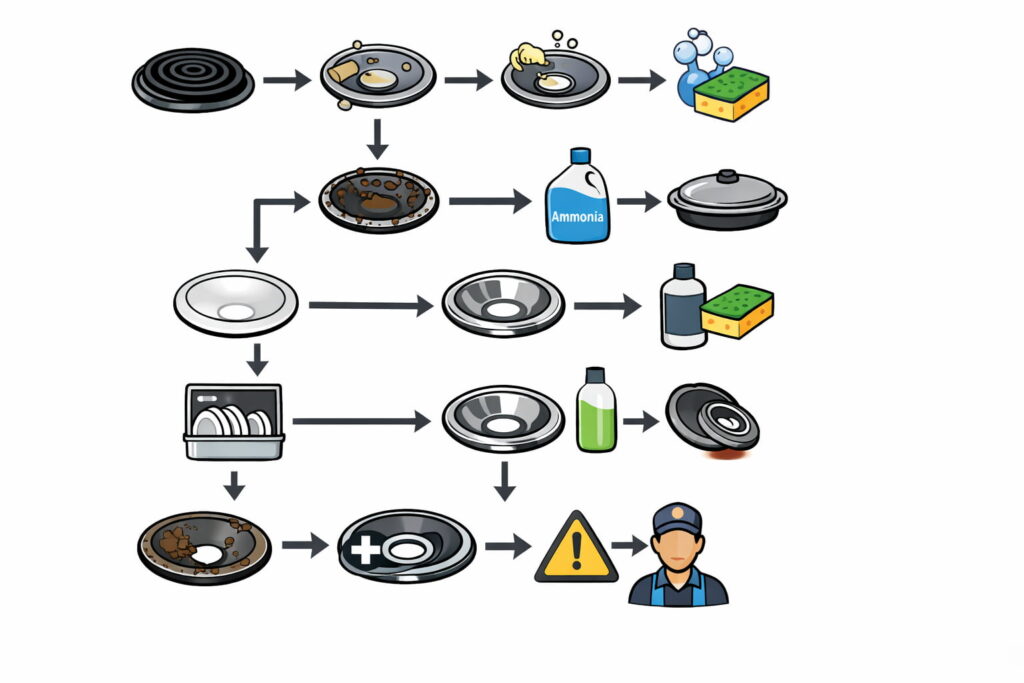
Light grease or fresh splatter
Start with hot soapy water and a soft sponge.
Burnt-on grease
Use the stronger method your finish and manual allow, such as an approved ammonia soak.
Stained but otherwise solid porcelain pan
Dishwasher cleaning may be allowed.
Chrome pan with stubborn buildup
Stay cautious with abrasives and follow finish-specific guidance.
Warped, flaking, or rusted pan
Replace it instead of spending more time scrubbing.
Burn mark near the burner connection
Stop and have the range checked.
FAQs
How do you clean stove drip pans with burnt-on grease?
Start with hot soapy water on a fully cooled removable pan. If that is not enough, use the heavier cleaning method your finish and owner’s manual allow, such as an approved ammonia soak or dishwasher cleaning for compatible pans.
Can I soak stove drip pans overnight?
Sometimes. GE allows an overnight ammonia soak for heavy soil on some chrome drip pans, but you need ventilation and you should follow finish-specific guidance.
Are stove drip pans dishwasher safe?
Some are. Whirlpool says porcelain drip bowls are dishwasher safe, and GE says some chrome and aluminum pans may be dishwasher safe too. Your manual is the final check.
Can I use steel wool on stove drip pans?
Not as a general rule. GE says not to use steel wool on chrome drip pans because it can scratch the finish. That is the safer default unless your exact manufacturer guidance says otherwise.
When should I replace stove drip pans instead of cleaning them?
Replace them when they are warped, rusted, flaking, badly damaged, or no longer sit correctly. At that point, replacement is usually more practical than harsher cleaning.
Is it safe to use ammonia on stove drip pans?
It can be, if your finish and owner’s manual allow it and you use it with ventilation, gloves, and no chemical mixing. Never combine ammonia with bleach or other cleaners.
Can I put drip pans in a self-cleaning oven?
Sometimes, but only for certain finishes and models. Some GE guidance allows it for certain aluminum or porcelain drip pans, while chrome pans should not be cleaned that way.
Conclusion
Cleaning stove drip pans does not have to be complicated. Start with soap and water, keep the method matched to the pan finish, and move up to stronger options only when your manual supports them. If the pan is warped, flaking, or heavily damaged, replacement is usually the better fix. A little routine cleaning is easier, safer, and much more effective than fighting months of baked-on grease all at once.
Sources / References
- Whirlpool Product Help — Burner or Drip Bowls, Electric Range
- Whirlpool Product Help — Cleaning the Burner or Drip Bowls, Electric Cooktop
- GE Appliances — Range Cleaning Chrome Drip Pans and Trim Rings
- GE Appliances — Range – Cleaning Aluminum Drip Pans
- GE Appliances — Parts that Can be Cleaned in the Self-Clean Oven
- GE Appliances — Range & Wall Oven: Using Aluminum Foil or Silicone Liners
- CDC — How to Safely Clean and Sanitize with Bleach
- CDC — Ammonia Chemical Fact Sheet
- U.S. Consumer Product Safety Commission — Avoid Kitchen Fires: Keep Stovetops Clean and Clear