

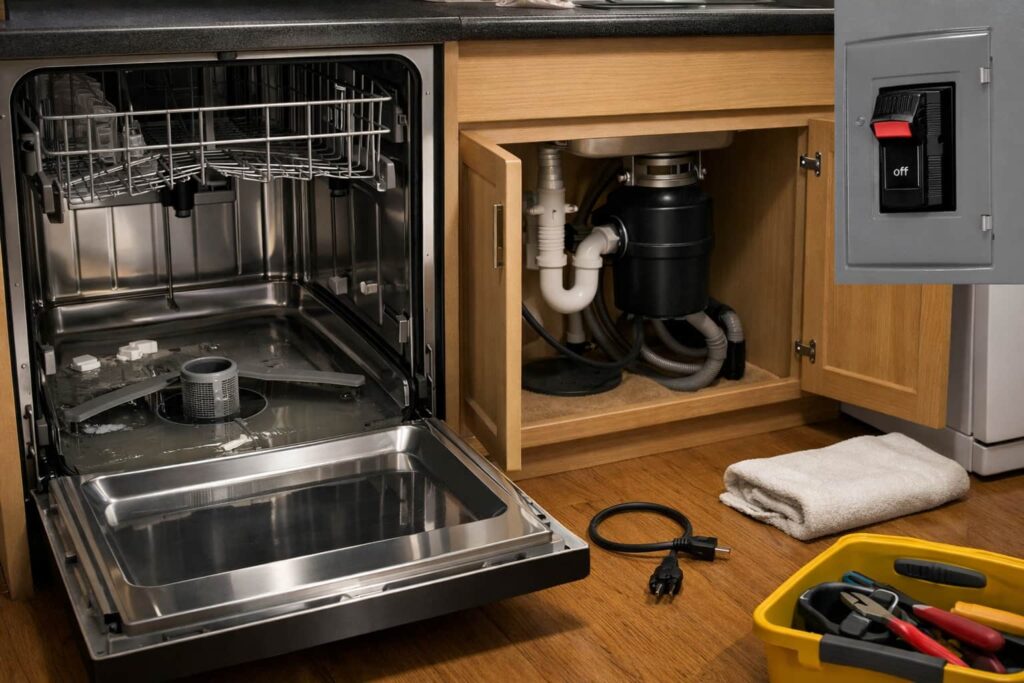
If your dishwasher is leaving standing water at the end of the cycle, dishwasher drain pump replacement may be the fix, but only after you rule out clogs, hose issues, disposal problems, and installation mistakes first. Official guidance from Bosch dishwasher drain troubleshooting, GE dishwasher not draining support, Whirlpool Product Help — Not Draining / Water Remains at End of Cycle, and Samsung dishwasher is not draining all point to simpler drain-path problems before pump failure in many cases.
That matters because replacing the pump too early can waste money and still leave you with the same problem. Very often, the real cause is a blocked filter, debris in the pump area, a kinked drain hose, a clogged garbage disposal connection, a detergent problem causing heavy suds, or a new-install issue like a forgotten knockout plug or incorrect high-loop routing.
Quick Checks First
Before you plan a dishwasher drain pump replacement, do these checks first:
- Clean the filter and inspect the drain area for debris.
- Check the drain hose for kinks, crushing, clogs, or bad routing.
- Make sure the sink drain or garbage disposal is clear.
- On a new install, verify the garbage disposal knockout plug was removed.
- Check for a proper high loop or air gap where required.
- Rule out oversudsing from the wrong detergent or too much detergent.
If those checks do not solve the problem, and the dishwasher still will not drain or keeps making drain-related noise, the drain pump becomes a more likely suspect.
What the dishwasher drain pump does
The drain pump pushes used water out of the tub and into the drain hose so it can flow into the household drain system. When that process fails, you may see standing water, hear unusual buzzing or grinding during drain, or get drain-related error codes on some models. Samsung notes that some dishwashers may show codes such as 5C, 5E, OC, or OE when draining problems occur.
Signs you may need dishwasher drain pump replacement
A drain pump is more likely to be the problem when you have already ruled out the common blockage and installation issues.
Common signs
- Water remains in the tub after the cycle ends
- You cleaned the filter and drain area, but the problem keeps returning
- The drain hose is clear and routed correctly
- The sink drain and garbage disposal are not blocked
- The dishwasher makes repeated buzzing or grinding during drain
- You keep getting a drain-related error after the basic checks
Bosch advises starting with the filter and pump area because debris is a common cause of poor draining. GE says to inspect the hose and sink-side connection for clogs or kinks. Whirlpool and Samsung both emphasize that installation mistakes are common, especially on newer setups.
What to check before you replace the drain pump
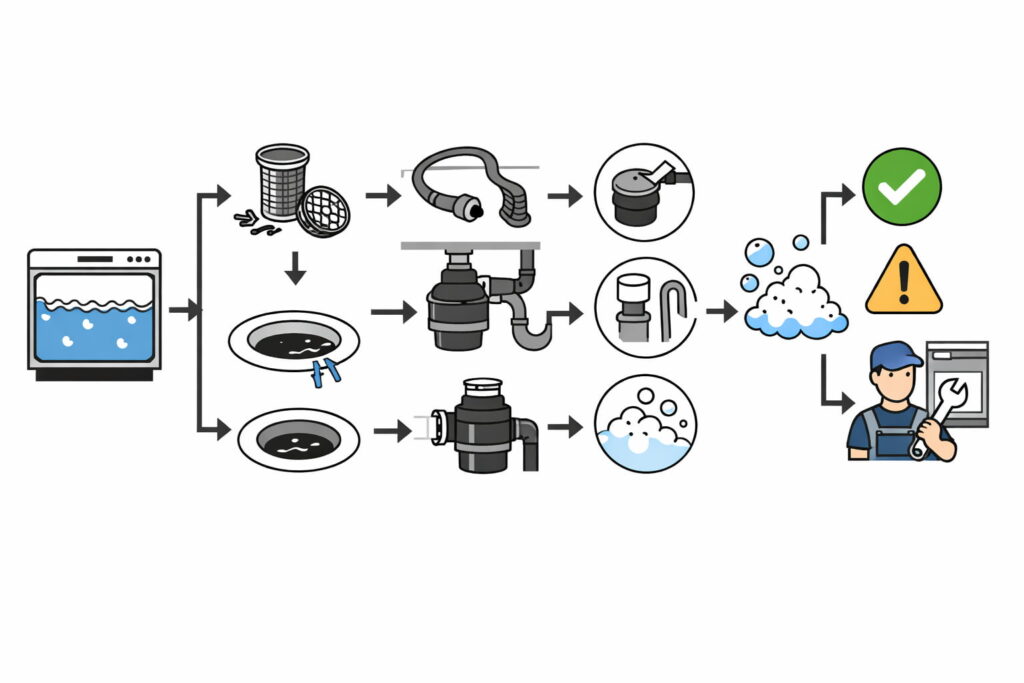
This is the most important part of the job. The official support pages are very consistent here.
1) Clean the filter and inspect the pump area
According to Bosch, food debris, dirt, and even sharp objects can clog the filter or pump area. If your model allows owner access to the pump cover area, remove debris carefully. Use caution because broken glass or other sharp objects may be present.
2) Check the drain hose
GE says to inspect the drain hose where it connects below the sink for a blockage or kink. Samsung also says the hose should be straight and not pinched shut, bent, or damaged. A crushed or badly routed hose can fully mimic pump failure.
3) Check the sink drain or garbage disposal
Whirlpool says to check for food or obstructions caught in the drain or garbage disposer and run the disposer to clear the obstruction. If the sink-side drain path is blocked, the dishwasher may not be able to empty even if the pump is still working.
4) Check for a forgotten knockout plug on a new install
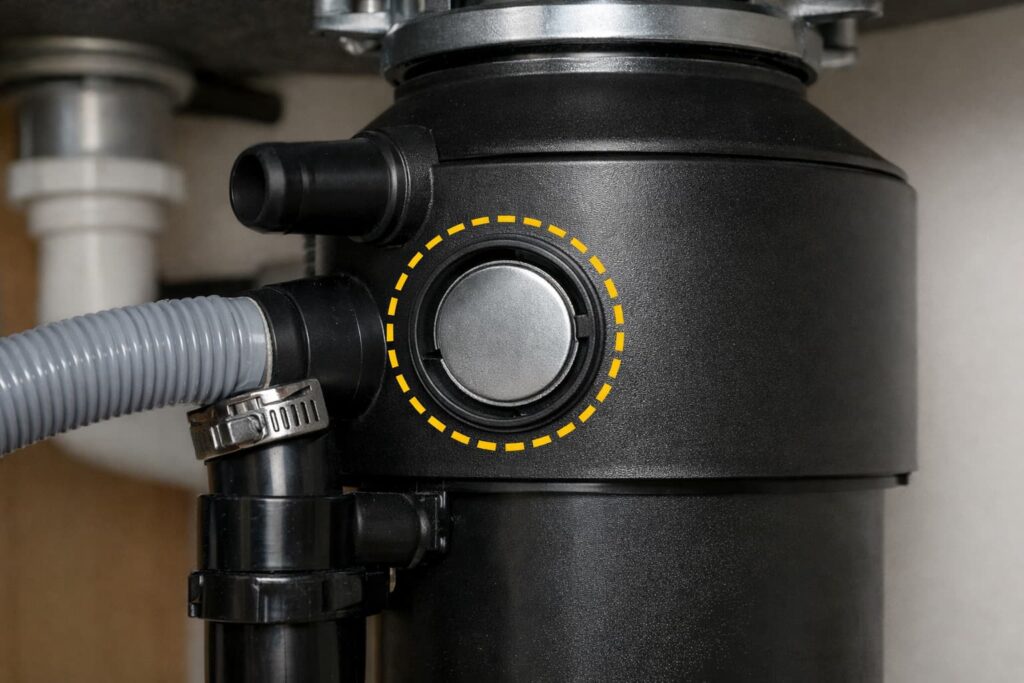
On a newly installed dishwasher or recently replaced garbage disposal, a forgotten knockout plug is one of the most common reasons the dishwasher will not drain. Whirlpool specifically tells users to inspect for this when a new installation will not drain properly.
5) Verify the high loop or air gap
Whirlpool says the drain hose should be installed with a proper high loop or connected to an air gap where required. Samsung gives the same general guidance and notes that correct hose routing helps prevent backflow and drainage problems.
If your sink has an air gap, it is usually the small fitting mounted on top of the sink or countertop near the faucet. Whirlpool says the air gap helps the dishwasher drain properly without creating a vacuum, and both Whirlpool and GE say to check the air gap and vent opening for debris if the dishwasher is not draining.
6) Rule out oversudsing from the wrong detergent
If you recently switched detergents, used too much detergent, or accidentally used dish soap, check that before blaming the drain pump. GE says the wrong detergent or too much detergent can cause oversudsing that prevents the dishwasher from draining properly. If you see heavy suds instead of just standing water, correct the detergent issue first and then retest the dishwasher.
Quick symptom-to-cause guide
Standing water after every cycle
Most likely causes are a clogged filter, blocked pump area, kinked hose, garbage disposal blockage, bad hose routing, missing high loop, a clogged air gap, oversudsing, or a forgotten knockout plug.
Dishwasher is brand new and never drained right
The most likely cause is an installation problem, not a failed pump. Samsung says non-draining is often due to installation issues, and Whirlpool says to check the knockout plug and routing first.
Loud buzzing or grinding during drain
Possible causes include debris caught in the drain area or a failing pump. On some models, basic drain-area cleaning is owner-safe. If the noise continues after that, service becomes more likely.
Water drains slowly but does not fully leave
This often points to a partial blockage in the hose, sink drain, disposer connection, or air gap rather than a fully failed pump.
Can you do a dishwasher drain pump replacement yourself?
Sometimes, but it depends heavily on the model.
Basic cleaning and inspection steps are often homeowner-safe. Full drain pump replacement is more model-specific because it may require disconnecting power, water, hoses, mounting hardware, and sometimes pulling the dishwasher out from under the counter. That moves the job beyond basic maintenance and into repair work that may not be appropriate for every homeowner.
A good rule of thumb
A DIY replacement is more reasonable only if all of these are true:
- Your owner’s manual supports that level of service for your model
- You can safely disconnect power and water
- You do not need to alter wiring or plumbing beyond normal reconnection
- The dishwasher can be accessed without damaging cabinets or flooring
- There are no signs of overheating, burning, leaking around electrical areas, or breaker trips
If any of those are not true, scheduling professional service is the safer move.
Safety first before you do anything
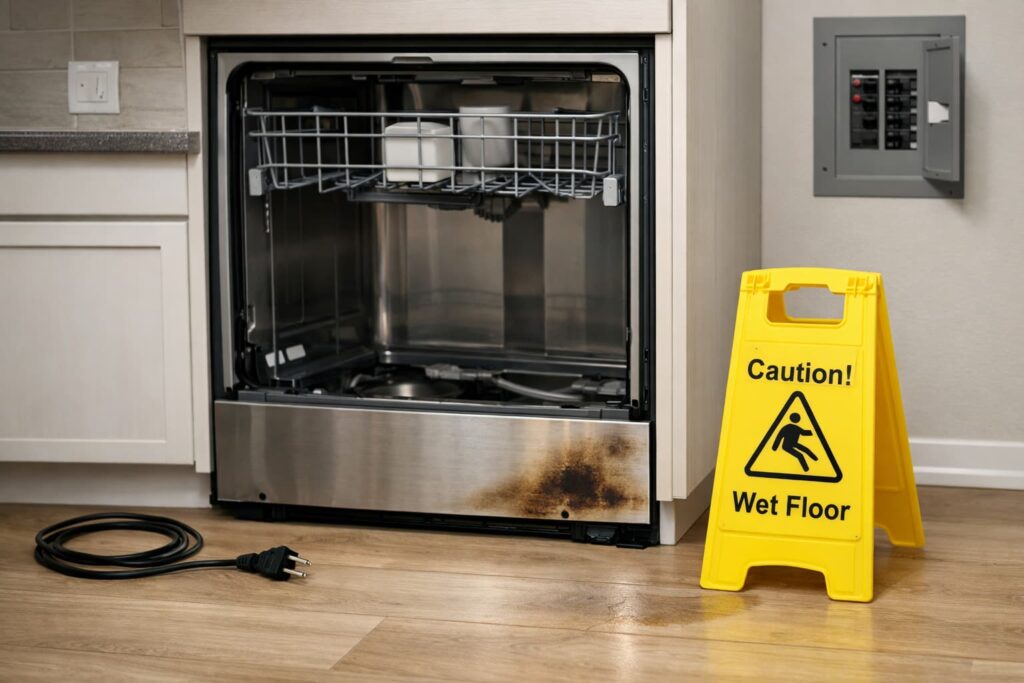
Do not rely on the dishwasher being “off” as your only protection. GE owner documentation says the appliance should be disconnected from the power supply before maintenance, and it also says repairs not specifically recommended in the guide should be referred to a qualified technician.
Do not pour drain cleaner into the dishwasher. GE specifically says not to use drain cleaner in the dishwasher, and that matters because a draining problem is often a filter, hose, air-gap, disposer, or installation issue rather than something a chemical cleaner will safely fix.
Stop and call a pro if you notice any of these
- Burning smell
- Smoke
- Melted plastic
- Scorch marks
- Repeated breaker trips
- Water near wiring or electrical connectors
- Damage that requires opening non-owner-access panels
- A hardwired dishwasher you are not trained to disconnect safely
This is an important boundary. The U.S. Consumer Product Safety Commission recall database includes past dishwasher recalls tied to electrical fire hazards. If your drain problem comes with electrical warning signs, stop troubleshooting and move to professional service.
How to identify the correct replacement part
Do not order a drain pump by guesswork.
Bosch Dishwasher Replacement Parts says to search by model number so you can see the correct parts and diagrams for your machine. Whirlpool Product Help — How do I order a replacement part? also says to look up parts by exact model number or part number.
Where to find the model number
The exact location varies by brand and model, but common places include:
- Around the door frame
- On the inner door area
- On the rating plate or product tag
- In the owner’s manual or support page for your model
The safest approach is to use your manufacturer’s support page and manual lookup before ordering anything.
Dishwasher drain pump replacement cost
There is no reliable official nationwide flat price from the major manufacturers for dishwasher drain pump replacement. That means a single hard cost number can be misleading without the exact model, labor rate, and service setup.
A practical way to estimate the real cost is to:
- Check whether the dishwasher is still under warranty
- Look up the exact pump part by model number
- Compare that part cost with a service visit and labor quote
- Consider the dishwasher’s age and overall condition before approving the repair
Whirlpool Product Help — Is My Appliance in Warranty? explains that warranty coverage depends on the appliance and its documentation, so it is worth checking before you pay out of pocket.
Is it worth replacing the drain pump?
Usually, yes, if the dishwasher is otherwise in good condition and the problem has been clearly confirmed.
It makes more sense to replace the pump when:
- The dishwasher still will not drain after the official troubleshooting checks
- The machine cleans normally otherwise
- There are no major leaks or electrical problems
- The correct part is available
- The repair cost is reasonable compared with replacement
It makes less sense when the dishwasher has multiple problems, shows broader electrical issues, or is already in rough condition overall.
When dishwasher drain pump replacement is probably not the fix
The dishwasher is brand new
Start with installation mistakes first. New-install drainage problems are often caused by hose routing or a disposal knockout plug, not a failed pump.
The sink or garbage disposal is backing up
That points to a shared drain-path problem outside the dishwasher itself.
You find food, glass, or debris in the drain area
That may be a blockage, not a failed pump. Bosch specifically warns that debris in the pump area may be sharp.
The drain hose is kinked or crushed
A hose issue can easily imitate a bad pump.
You see lots of suds
Heavy suds can slow or disrupt draining and may point to the wrong detergent or too much detergent rather than a failed pump.
Step-by-step safe decision path
Step 1: Disconnect power
Unplug the dishwasher if it uses a plug. If it is hardwired, turn off the correct breaker and do not proceed unless you can confirm the appliance is safely de-energized.
Step 2: Remove standing water if needed
Use a cup, small container, or sponge to remove enough water so you can inspect the bottom of the tub safely.
Step 3: Clean the filter
Remove and rinse the filter if your model’s manual says this is owner-safe.
Step 4: Inspect the visible drain area
Check for food, labels, glass, or other debris around the drain opening or pump cover area if your model allows access.
Step 5: Check the hose and sink-side connection
Inspect for kinks, crushing, poor routing, and sink or disposer blockages.
Step 6: Check for suds or air-gap blockage
If you see heavy suds, correct the detergent issue before retesting. If your sink has an air gap, check it for visible debris or blockage.
Step 7: Re-test
If the dishwasher drains normally after cleaning or routing correction, you likely do not need a new pump.
Step 8: Move to parts lookup or service
If the drain problem continues after all the official basic checks, use your exact model number to find the manual, parts diagram, and approved service options.
FAQs
How do I know if my dishwasher drain pump is bad?
A bad pump becomes more likely only after you have checked the filter, drain area, hose, disposer connection, installation setup, and detergent issue and the dishwasher still will not drain properly.
Can a clogged filter look like a bad drain pump?
Yes. Official manufacturer guidance repeatedly puts filter and debris checks ahead of pump replacement.
Do I need to replace the pump if my new dishwasher will not drain?
Usually not. New-install problems are often caused by hose routing or a forgotten knockout plug.
Should I pull the dishwasher out myself to replace the pump?
Only if your model documentation supports that level of work and you can safely disconnect power, water, and drain connections.
Can I use a universal drain pump?
That is risky. Major manufacturers direct users to look up parts by exact model number or part number.
Is dishwasher drain pump replacement covered under warranty?
It can be. Coverage depends on the brand, purchase date, and warranty terms for your specific model.
What is the safest first step if my dishwasher will not drain?
Disconnect power, then do the basic owner-safe checks: filter, visible drain area, hose routing, sink drain, garbage disposal connection, and obvious suds or air-gap blockage.
Conclusion
Dishwasher drain pump replacement can solve a real drain failure, but it should come after the simpler official checks. In many cases, the real fix is cleaning out debris, clearing the disposer connection, correcting hose routing, cleaning a clogged air gap, fixing a detergent problem, or correcting a new-install mistake. Use your exact model number to pull the right manual and parts diagram first, and stay conservative if the job moves beyond basic owner-access maintenance.
This official Bosch video is useful if you need to remove standing water safely before checking the filter and drain area.
This official GE Appliances video helps with the filter-cleaning step that should come before pump replacement.
This official Samsung installation video is helpful for checking drain-hose routing and setup issues that can mimic a bad pump.
This shorter Samsung video gives a quick visual of the drain-hose connection if you want a more focused routing check.
Sources / References
Bosch dishwasher drain troubleshooting
GE dishwasher not draining support
Whirlpool Product Help — Not Draining / Water Remains at End of Cycle
Samsung dishwasher is not draining
Whirlpool Product Help — How do I order a replacement part?
Whirlpool Product Help — Is My Appliance in Warranty?
Bosch Dishwasher Replacement Parts
U.S. Consumer Product Safety Commission recall database