

If your toilet fill valve making noise problem happens during or right after flushing, the most common causes are a leaking tank-to-bowl seal, debris inside the fill valve, a clogged inlet screen, an incorrect tank water level, or a worn fill valve that needs replacement. Official guidance from Korky, KOHLER Assist, Gerber USA, and American Standard all point to the same safe order: check for leak or overflow issues first, flush debris from the valve if your design allows it, correct the water level, and replace the fill valve if the noise keeps coming back.
A noisy fill valve can sound like hissing, squealing, whistling, humming, or vibrating. The sound matters because each one points to a slightly different problem. Start with the simple checks before you buy parts.
Quick Checks First
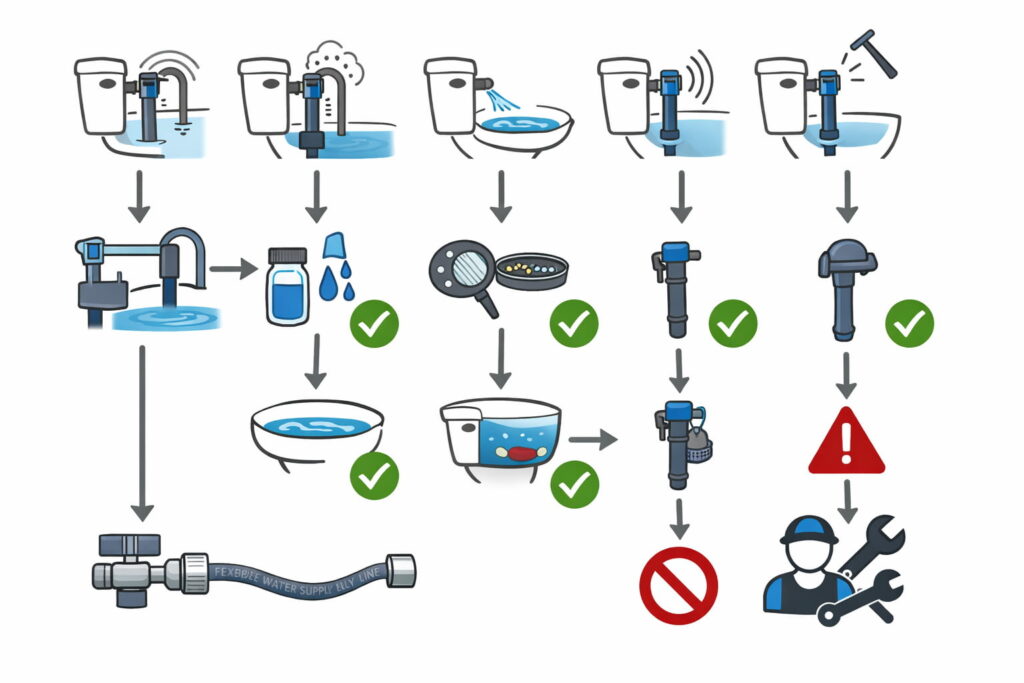
A toilet fill valve making noise is often caused by a leak, overflow, sediment, or a worn valve. If it hisses, check for water leaking into the bowl. If it squeals or whistles, look for debris or a clogged screen. If it hums or vibrates, the valve’s internal seal or diaphragm may be worn. If cleaning and adjustment do not solve it, replacement is usually the next step.
Quick Noise Guide
| If the toilet sounds like… | Most likely cause | Best first check |
|---|---|---|
| Hissing | Water leaking from tank to bowl or water entering overflow | Check flapper, chain, and tank water level |
| Squealing or whistling | Debris, mineral buildup, clogged screen, or restricted flow | Flush the fill valve or clean the screen if your model allows it |
| Humming or vibrating | Worn fill valve diaphragm or internal seal | Check water level, then replace the valve if the sound keeps returning |
| Short refill bursts every so often | Slow tank-to-bowl leak | Do a dye test before replacing the fill valve |
Safety First Before You Start
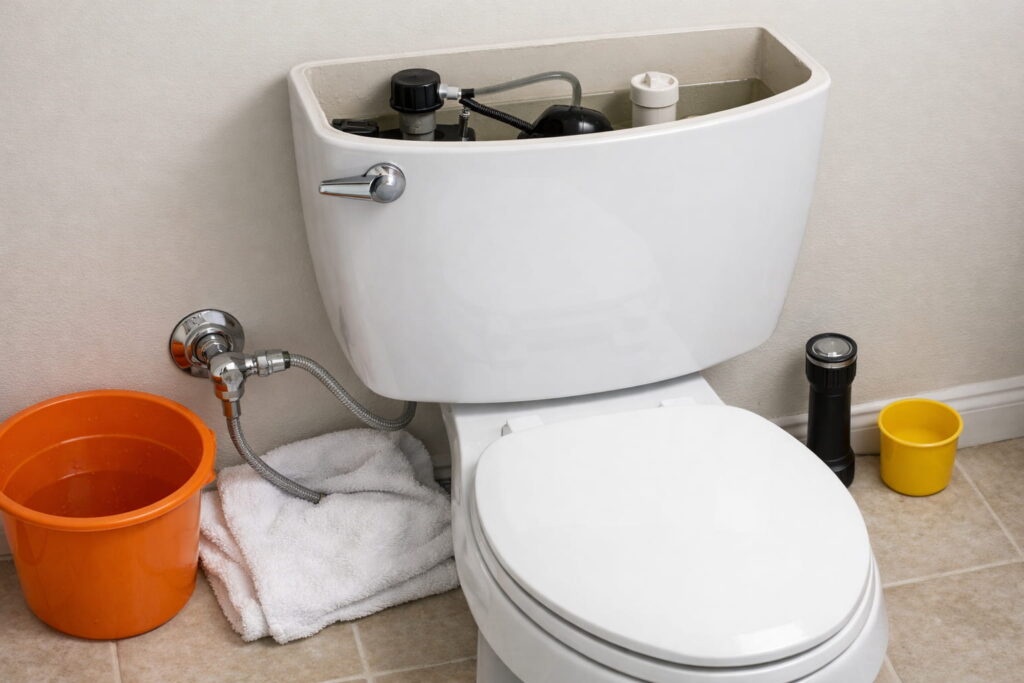
This is usually a homeowner-safe repair, but stay within basic toilet maintenance. Safe steps include turning off the toilet shutoff valve, removing the tank lid, checking the chain and water level, flushing debris from the fill valve on compatible designs, and replacing the fill valve with the correct part. Korky’s replacement guide also recommends draining the tank and hand-tightening connections during reassembly.
Stop and call a plumber if you find a cracked tank, a shutoff valve that will not close, badly corroded supply hardware, water leaking outside the tank that you cannot control, or loud banging that affects more than just this toilet. Pressure-related banging may need professional diagnosis rather than a simple fill valve swap.
What You May Need
For most basic checks or a fill valve replacement, have these ready:
- small cup or sponge
- adjustable pliers
- towel or shallow tray
- food coloring for a dye test
- replacement fill valve that matches your toilet or is listed as compatible
If the supply nut or shutoff looks heavily corroded, stop before forcing it. That is a good point to call a plumber instead of risking a broken valve or supply connection.
What a Toilet Fill Valve Does
The fill valve refills the tank after each flush and shuts off when the tank reaches the set water level. If debris gets inside, the seal wears out, or the valve cannot shut off cleanly, it can make noise or keep running longer than it should. KOHLER Assist identifies debris lodged in the cap as a common cause of constant running, and American Standard says flushing debris from the valve can restore proper shutoff on compatible models.
The Sound Usually Tells You the Cause
Hissing Noise
A constant hiss usually means the tank is losing water, so the fill valve keeps opening to refill it. Korky says this can happen when the flapper or flush valve seal leaks, the chain interferes with closing, the flush valve opening is damaged or dirty, the water level is too high, or the fill valve does not shut off completely. Korky also says the water level should sit about 1/2 inch below the top of the overflow tube.
Squealing or Whistling Noise
A high-pitched sound usually points to restricted water flow, sediment, or a clogged inlet screen. Gerber USA says a high-pitch noise after flushing can be caused by a clogged fill valve screen, and their first fix is to remove and clean the screen. Korky also lists mineral buildup and restricted flow as common causes of a noisy fill valve.
Humming, Vibrating, or “Fog Horn” Noise
This usually points to a worn diaphragm or seal inside the fill valve. Korky says resonance can happen when the internal diaphragm or seal weakens, or when pressure causes the valve to flutter. If the sound keeps returning after adjustment, replacement is usually the fix.
Quick 2-Minute Diagnosis Before You Buy a Part
Take off the tank lid and flush once. Then check these in order.
1) Is Water Going Into the Overflow Tube?
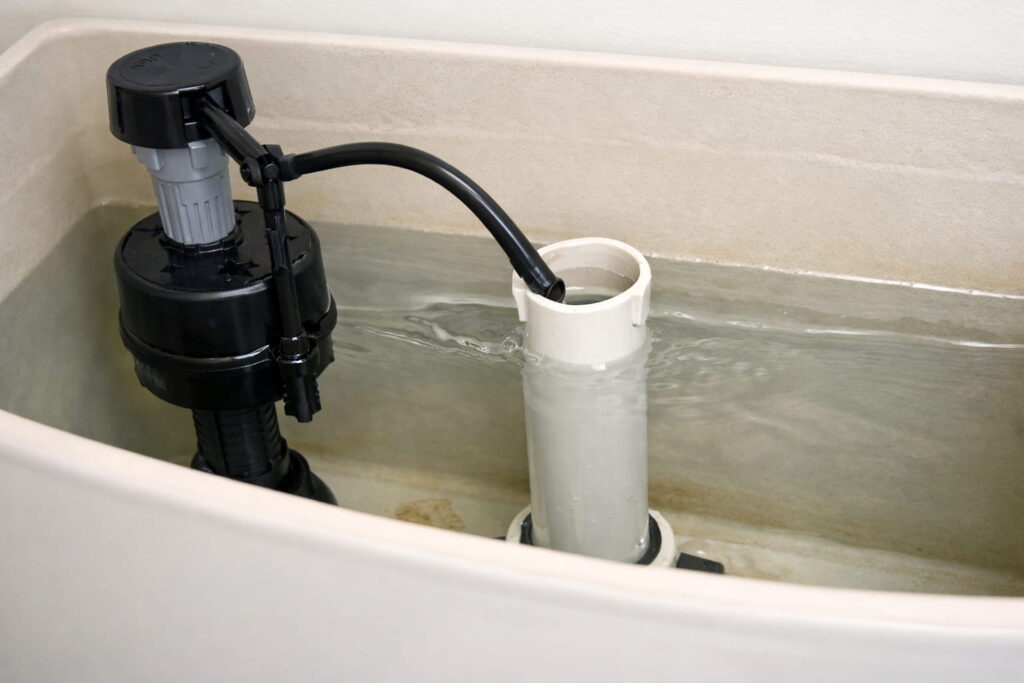
If yes, the tank water level is too high or the valve is not shutting off properly. KOHLER Assist says overflow into the flush valve overflow can cause constant running, and Korky says an overly high water level can keep the valve active.
2) Does the Bowl Show a Small Ripple Even When Nobody Flushed?
That often means water is leaking from the tank into the bowl. The U.S. EPA WaterSense leak test recommends adding a few drops of food coloring to the tank and waiting 10 minutes without flushing. If color appears in the bowl, there is a leak.
3) Does the Noise Happen Only During Refill?
That makes the fill valve itself more suspicious, especially if the sound is squealing, chirping, or humming. Gerber USA and American Standard both point first to cleaning the screen or flushing debris from the valve before replacing the assembly.
4) Is the Shutoff Valve Fully Open and the Supply Line Straight?
A partially open shutoff valve or restricted supply can contribute to noise. Korky lists restricted flow and supply issues among the common causes of fill valve noise, and their slow-fill guidance says to make sure the water supply valve is completely open and the supply line is free of kinks.
Step-by-Step Fixes for a Toilet Fill Valve Making Noise
1) Lower the Water Level if It Is Too High
If water is entering the overflow tube, lower the tank water level until it sits below the overflow opening. Korky says the correct level is about 1/2 inch below the top of the overflow tube. This is one of the fastest fixes for a hissing toilet.
2) Check the Flapper or Flush Seal
A leaking flapper or flush seal can make the fill valve run again and again. Korky and KOHLER Assist both point to tank-to-bowl leakage as a root cause of refill noise. Check that the flapper seats evenly and that the chain is not holding the seal open.
3) Flush Debris Out of the Fill Valve
This is often the best first repair when the valve squeals, whistles, or keeps running.
American Standard says to remove the cap assembly, inspect for debris, hold an inverted cup over the uncapped valve body, turn the water on fully for 3 to 4 seconds, do this twice, then clean and reinstall the seal and cap. KOHLER Assist also says flushing the fill valve with a plastic cup may resolve a toilet that is running, noisy, or not refilling. Only do this if your valve design supports cap removal and flushing.
This official KOHLER video is the best direct visual match for the fill-valve flushing step on compatible two-piece KOHLER toilets.
This official KOHLER video helps if the toilet is a one-piece model, where the flushing procedure can differ.
This official Fluidmaster video is useful when the toilet uses a Fluidmaster 400-series style fill valve and you want to try debris flushing before replacement.
4) Clean the Fill Valve Screen if Your Model Uses One
For a high-pitched noise after flushing, Gerber USA says to remove and clean the fill valve screen, then test again. If the sound remains, replace the fill valve.
If your home has hard water or sediment in the supply, the noise may return even after cleaning. When that happens, repeated cleaning is usually only a temporary fix, and replacing the fill valve is often the more reliable next step.
5) Replace the Fill Valve if Noise Keeps Returning
If you corrected the water level, ruled out a leaking flapper, and flushed the valve, but the toilet still squeals, hums, or hisses, replacement is usually justified. Korky, Gerber USA, and American Standard all move to replacement when cleaning does not solve the problem.
Before you buy a replacement, confirm that your toilet uses a standard-style fill valve or a model-specific assembly. Some toilets accept common universal replacements, while others work best with the manufacturer’s specified part. Matching the replacement to the toilet model helps avoid fit, height, and refill problems.
A basic homeowner-safe replacement usually follows this order: turn off the water, flush and drain the tank, remove the remaining water with a sponge or cup, disconnect the supply line, remove the old valve, install the new one at the correct height, reconnect the line, turn the water back on, and adjust the tank level. That sequence is supported by Korky’s replacement guide and American Standard’s fill valve replacement guidance.
After Replacement, Check These Before You Close the Tank
Flush the toilet two or three times and confirm all of the following:
- the tank refills without hissing, squealing, or humming
- the water stops below the top of the overflow tube
- the refill tube is aimed into the overflow tube
- the supply connection stays dry
- the toilet does not start refilling again a few minutes later
If the new valve is quiet during refill but the toilet still refills on its own later, the remaining problem is more likely a flapper, flush seal, or overflow issue rather than the new fill valve.
This official KOHLER replacement video is the best visual guide for the “clean first, replace next” path covered in this article.
This official Korky video is useful if your toilet uses a Korky-style valve and you want a brand-specific service or replacement visual.
When the Noise Is Not Really the Fill Valve
Tank Leak Into the Bowl
If the fill valve keeps cycling on, the toilet may be losing water through the flapper or seal instead of through the valve itself. The EPA WaterSense dye test is the easiest way to confirm that.
https://www.youtube.com/watch?v=fFF_vF_K8W4
This EPA WaterSense video directly supports the leak-test step, which helps readers rule out a flapper or seal problem before replacing the fill valve.
Overflow Problem
If the water level is too high, the tank can silently send water into the overflow tube, which keeps the fill valve active. KOHLER Assist calls this out directly, and Korky gives the target water level as about 1/2 inch below the top of the overflow tube.
Water Pressure or Pipe Vibration
If the noise is more like banging, thumping, or vibrating in the wall, the issue may be pressure-related rather than a simple fill valve failure. Korky says a plumber may be needed to evaluate water hammer or pressure-related pipe noise.
When to Replace Instead of Keep Troubleshooting
Replace the fill valve when:
- the noise returns soon after cleaning
- the valve does not shut off consistently
- the valve hums or squeals every refill
- the screen is clean but the sound remains
- the valve is clearly worn and the problem keeps returning
That decision matches the repair path given by Korky, Gerber USA, and American Standard.
Simple Mistakes That Make the Noise Worse
Replacing the Fill Valve Before Checking for a Leak
If the flapper leaks, a brand-new fill valve can still keep turning on and off. Do the dye test first. The U.S. EPA WaterSense method is quick and easy.
Ignoring the Overflow Tube
If water is spilling into the overflow, the tank level is wrong or the shutoff is failing. KOHLER Assist says this can cause constant running.
Assuming Every Noise Means Replacement
Official guidance from American Standard, KOHLER Assist, and Gerber USA all support trying debris flushing or screen cleaning first on compatible valves.
Stop and Call a Pro
Stop and get professional help if:
- the shutoff valve will not close
- the supply nut or shutoff looks ready to break
- the tank is cracked
- you hear loud banging in multiple fixtures
- water is leaking outside the tank and you cannot control it
- the toilet uses a proprietary assembly you cannot identify safely
Those are the points where a simple fill valve swap can turn into a bigger plumbing repair. Korky specifically flags plumber involvement for pressure-related banging or water hammer concerns.
FAQ
Why is my toilet fill valve making a high-pitched noise?
A high-pitched sound often means the fill valve screen is clogged, water flow is restricted, or sediment has built up inside the valve. Gerber USA and Korky both point to those causes.
Why does my toilet hiss after it finishes flushing?
A hissing toilet usually means the tank is still losing water into the bowl or overflow, so the fill valve keeps trying to refill it. Korky explains that a leaking flapper, bad seal, or high water level can cause this.
Can I fix a noisy toilet fill valve without replacing it?
Yes, sometimes. Official guidance supports checking the water level, testing for a leak, flushing debris from the valve, or cleaning the screen before replacing the valve. KOHLER Assist, American Standard, and Gerber USA all support that sequence.
How do I know if the flapper is the problem instead of the fill valve?
Use a dye test. The U.S. EPA WaterSense method says to add food coloring to the tank and wait 10 minutes without flushing. If color appears in the bowl, the tank is leaking into the bowl.
Should I replace the fill valve if the toilet hums?
If the toilet hums repeatedly after basic adjustment and debris flushing, replacement is usually the next step. Korky ties humming and resonance to worn internal parts.
Can high water pressure make a toilet fill valve noisy?
It can contribute. Korky lists pressure-related behavior and supply vibration among possible causes of loud valve noise.
Conclusion
A toilet fill valve making noise does not always mean you need a new part right away. Start with the simple checks official manufacturers recommend: look for overflow, test for a silent leak, flush debris from the valve if your model allows it, and clean the screen where applicable. If the noise keeps returning, replacement is usually the smartest fix.
Handle the easy checks first, stay within basic homeowner-safe plumbing, and move to replacement or a plumber when the symptoms point beyond a simple adjustment.
Sources / References
- Korky — How to Fix Loud or Broken Fill Valve
- Korky — How to Replace Toilet Fill Valve
- Korky — How to Fix Slow Filling Toilet
- KOHLER Assist — Toilet Constantly Leaking or Running
- KOHLER Assist — Toilet Occasionally Leaking or Running
- KOHLER Assist — VIDEO: How to Flush the Fill Valve on KOHLER Two-Piece Toilets
- Gerber USA — What do I do if my toilet makes a high pitch sound after flushing?
- American Standard — Flushing Out A Toilet Fill Valve
- American Standard — How do I replace the fill valve in a toilet tank?
- U.S. EPA WaterSense — Fixing Leaks at Home