

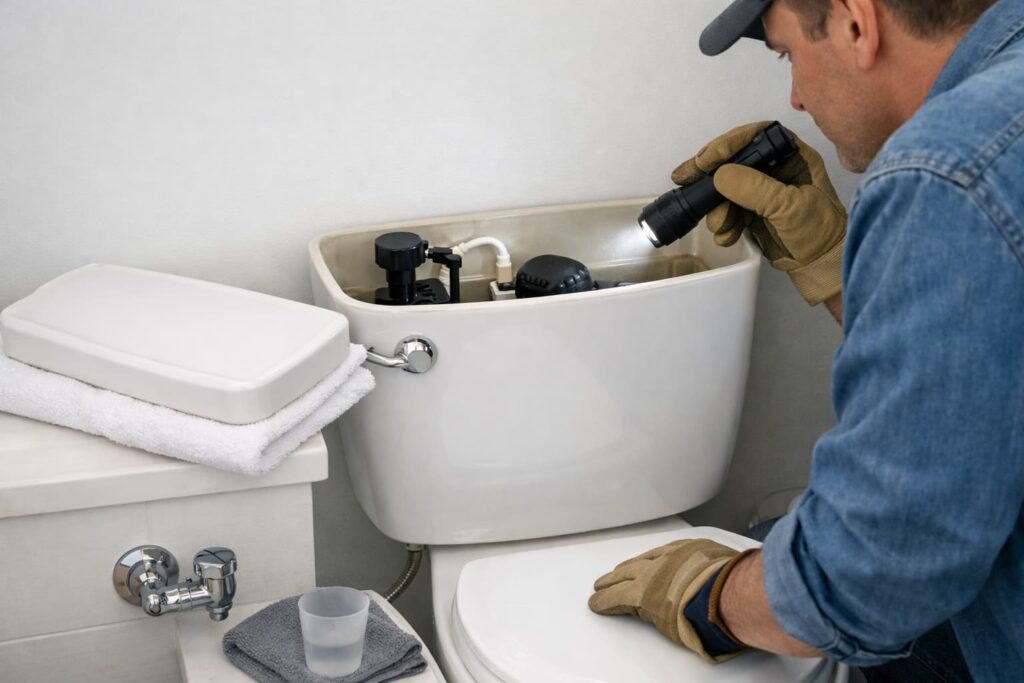
If your toilet tank not filling after flush, the fix is usually straightforward: it’s most often a closed/blocked water supply, a stuck/clogged fill valve, or a float that’s binding. Start with the quick checks below before replacing parts.
Safety first (1 minute)
- Turn off the water at the shutoff valve before disconnecting hoses or removing parts.
- Keep a towel and small cup/bucket nearby for drips.
- Don’t over-tighten plastic fittings (easy to crack/strip).
- Avoid in-tank cleaning tablets—some manufacturers warn they can damage tank components and cause leaks/property damage. See TOTO — Toilet 1.6 GPF Installation Manual (0GU003Z).
Quick diagnosis: what happens right after you flush?
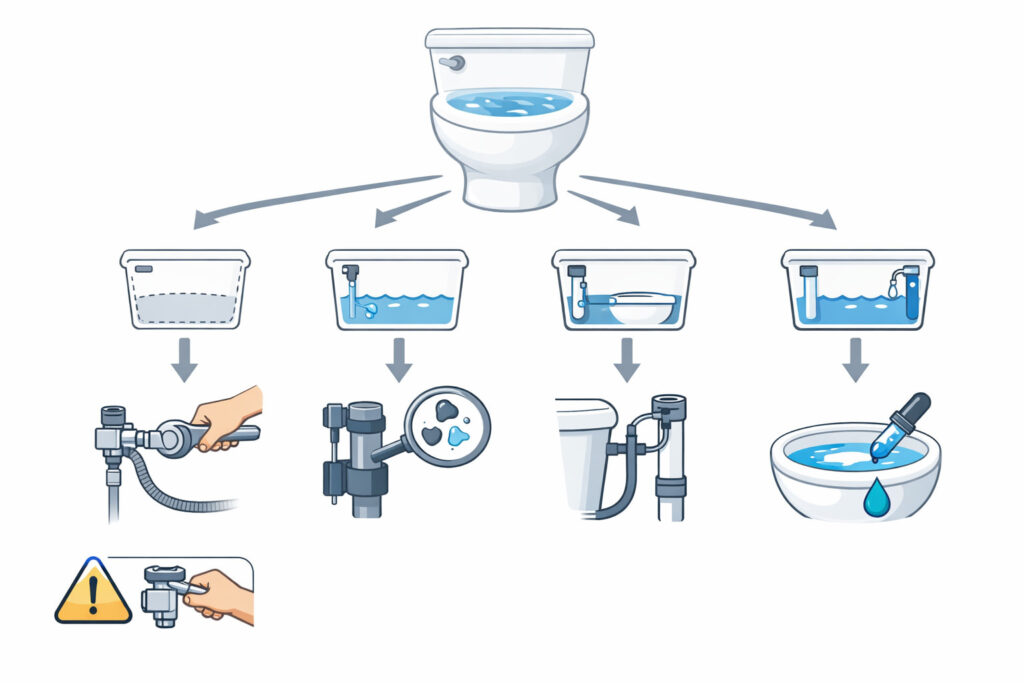
- Tank stays empty / silent: shutoff/supply issue, or fill valve stuck/clogged.
- Tank fills slowly or stops early: debris in the fill valve or float/adjustment issue.
- Tank fills, but bowl water is low after flush: refill tube/overflow setup.
- Tank keeps “topping off” like it never finishes: tank-to-bowl leak (flapper/canister seal).
Quick confirmation test (30 seconds): After a flush, pour a pitcher of water into the tank. If the toilet flushes normally, your flush valve/flapper is probably OK and the problem is more likely the fill system (supply, float, or fill valve). If it doesn’t flush normally even when the tank is manually filled, check the flapper/flush valve chain and seal before focusing on the fill valve.
Step 1: Confirm the water supply is actually on
This is the fastest win for “toilet tank not filling after flush.”
Check the shutoff valve
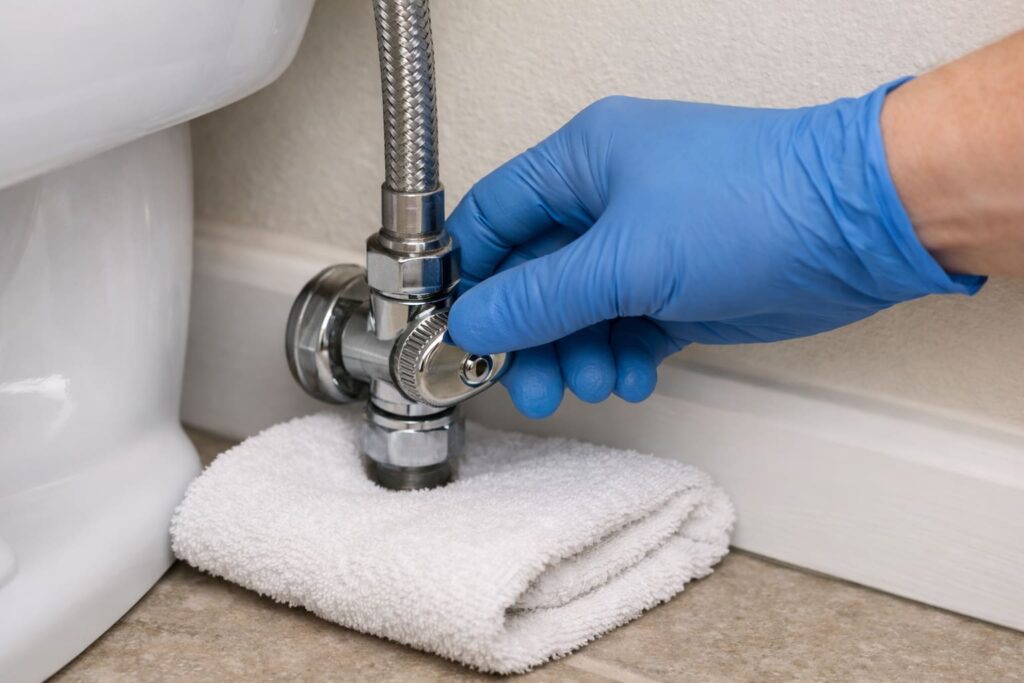
- Behind the toilet near the wall/floor.
- Turn counterclockwise to open (typical).
- If it won’t turn, don’t force it.
Check the supply line
- Ensure the flexible hose isn’t kinked or crushed.
If the valve is open but the tank is still silent: The shutoff valve or fill valve inlet screen can be clogged with sediment. If you’re comfortable doing basic plumbing, turn off the shutoff valve, place a bowl under the connection, and carefully disconnect the supply line to check for blockage. If you see heavy mineral buildup, corrosion, or you’re unsure about re-sealing connections, stop and call a plumber to avoid leaks/flooding.
Stop / call a plumber if the shutoff valve leaks, won’t turn, or looks corroded enough to break.
Step 2: Lift the lid and make sure the float isn’t stuck
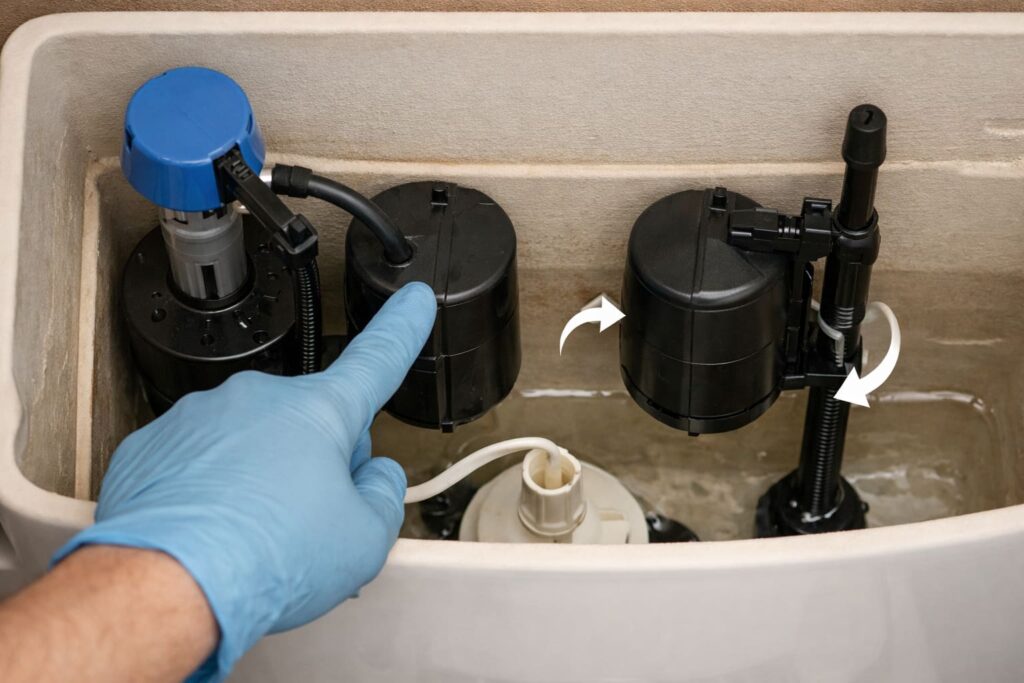
A float that binds can keep the fill valve closed.
Look for:
- Float rubbing the tank wall
- Chain snagging the float
- Float stuck “up”
Fix:
- Gently reposition so the float moves freely.
- Test by flushing again.
Also check the water level setting: Even if the tank refills, it may stop too soon if the float is set too low. A common target is filling to a level below the top of the overflow tube (not above it). Adjust the fill valve/float per the instructions on your valve (many have a simple adjustment screw or clip), then flush-test 2–3 times.
Step 3: Flush debris out of the fill valve (high success, low cost)
Sediment and debris commonly cause “not refilling,” “partial refill,” or “stops early.”
A clear homeowner procedure is shown in American Standard — Flushing Out A Toilet Fill Valve (FAQ).
General approach (exact steps vary by valve style):
- Turn off the shutoff valve.
- Flush to lower tank water.
- Remove the fill valve cap/top as directed for your model.
- Briefly run water to flush debris, then reassemble and test.
For another manufacturer note that debris under the cap can cause refill issues, see Kohler Assist — Toilet Constantly Leaking or Running.
Helpful videos (watch before you start):
Shows KOHLER’s quick method to flush a two-piece toilet fill valve (often fixes “not refilling”).
Shows a Fluidmaster no-tools repair/clean-out approach when a fill valve sticks or won’t refill reliably.
If flushing fixes it only temporarily, replacement is usually the next best step.
Step 4: Tank fills, but bowl is low after flush (refill tube + overflow setup)
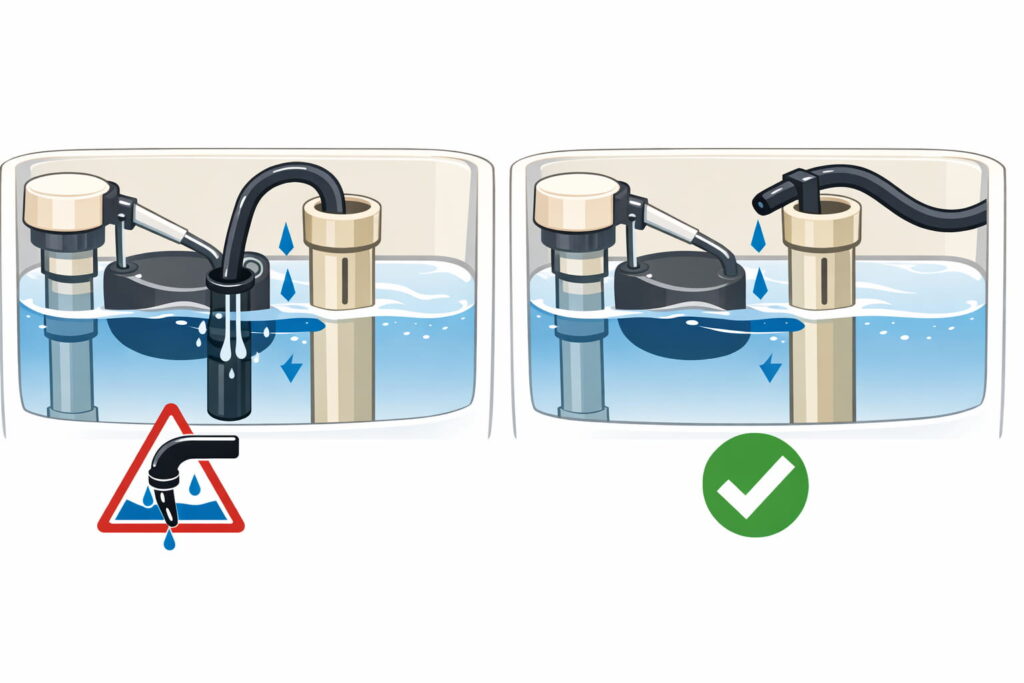
If the tank refills but the bowl water stays low, the issue is often refill routing.
Check refill tube placement
- The small refill tube should direct water into the overflow tube opening (usually clipped).
Many installation guides show the refill tube clipped correctly; see Lowe’s — Quick Install Guide (PDF).
Avoid “tube shoved down overflow” siphon problems
Some installation instructions warn not to push the refill tube down into the overflow pipe because it can contribute to siphoning/odd refill behavior. See Revaro — Fill Valve Installation Instructions (PDF).
Important detail: The refill tube should discharge into the overflow tube opening without being submerged. Keep the tube end above the overflow opening/waterline and secured with the clip so it can’t slip down—this helps prevent odd refill behavior and wasted water.
Helpful video:
Explains bowl-refill control and proper refill-tube setup when the bowl stays low after flushing.
Step 5: If it “never finishes filling,” test for a tank-to-bowl leak
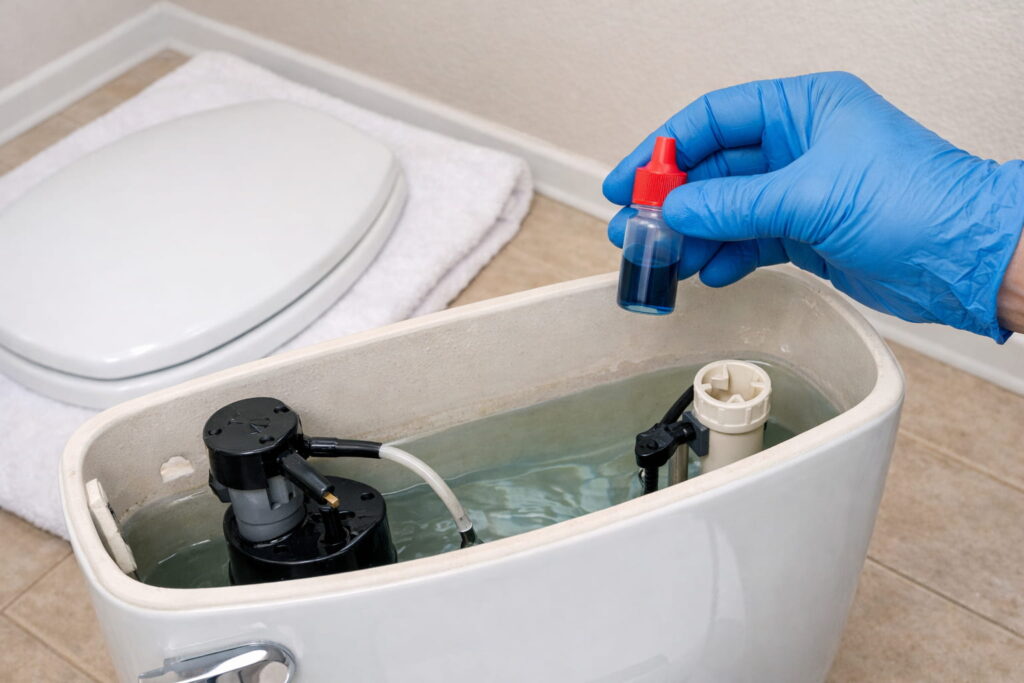
A slow leak from tank to bowl can make it look like the tank won’t fill or won’t stop topping off.
Use the dye/food-coloring test described by EPA WaterSense — Fixing Leaks Around the Home:
- Add food coloring to the tank.
- Wait without flushing.
- If color appears in the bowl, there’s a leak.
Next steps (keep it simple):
- Clean the sealing surface.
- Replace the flapper/canister seal that matches your toilet style.
Stop / call a plumber if you see a cracked tank/bowl or you’re dealing with corroded tank bolts that could risk porcelain breakage.
Step 6: Replace the fill valve (when flushing doesn’t solve it)
Replace the fill valve if:
- Cleaning/flush-out doesn’t restore reliable filling
- The valve sticks repeatedly
- You see wear/damage
Basic pointers:
- Follow the instructions included with the new valve.
- Hand-tighten plastic parts and check carefully for leaks after turning the water back on.
- Re-test by flushing several times.
Helpful videos:
Shows KOHLER’s fill valve replacement plus water-level adjustment steps.
Shows a beginner-friendly Fluidmaster fill valve replacement walkthrough.
Optional: If you have a TOTO “universal fill valve” style part
If your toilet specifically uses a TOTO-branded “universal” fill valve replacement (often made/packaged with Korky), a model-specific video can reduce setup mistakes.
Shows installing a Genuine TOTO universal fill valve by Korky and setting it up correctly.
Stop / Call a plumber (don’t push past these)
Call a pro if:
- Shutoff valve won’t turn, leaks, or seems like it could break
- You find any crack in the porcelain tank/bowl
- Water is leaking at the base, tank bolts, or supply connection and you can’t stop it quickly
- You’re not comfortable working around fragile porcelain or pressurized supply connections
If flooding is active: shut off the toilet valve (or home main), contain water with towels/bucket, and get help.
FAQs
Why is my toilet tank not filling after flush at all?
Most often the shutoff valve is closed/partly closed, the supply line is kinked, or the fill valve is stuck/clogged.
How do I know if my fill valve is clogged?
Slow filling, stopping early, or filling in bursts commonly points to debris under the fill valve cap/seat. Flushing it out often fixes the issue.
The tank fills, but the bowl is low after flush—what’s wrong?
Usually the refill tube isn’t routed/clipped correctly to the overflow tube. Correct routing often restores normal bowl refill.
Could a leak make it seem like the tank won’t fill?
Yes. A tank-to-bowl leak can cause constant topping-off. A dye test can confirm it without disassembly.
Are in-tank cleaning tablets safe?
Some manufacturers warn against in-tank cleaners because they can damage components and lead to leaks. Follow your toilet maker’s guidance.
When should I replace the fill valve instead of trying to fix it?
If flushing debris out doesn’t help, the valve keeps sticking, or it’s worn, replacement is usually the most reliable fix.
Post-fix checklist (do this before you close the lid)
- Flush 3 times and confirm the tank refills consistently.
- Confirm the fill stops cleanly and the tank water level stays below the top of the overflow tube.
- Verify the refill tube is clipped securely and the bowl refills to its normal level.
- Dry all connections with a towel and re-check in 10 minutes for slow drips at the supply line/shutoff valve.
- Put the tank lid back carefully—porcelain edges can chip.
Conclusion
When your toilet tank not filling after flush, start with supply and float checks, then flush debris out of the fill valve. If the bowl stays low, correct the refill tube setup. If it keeps topping off, test for a leak. Most fixes take only basic tools—and knowing when to stop and call a plumber can prevent a big mess.