

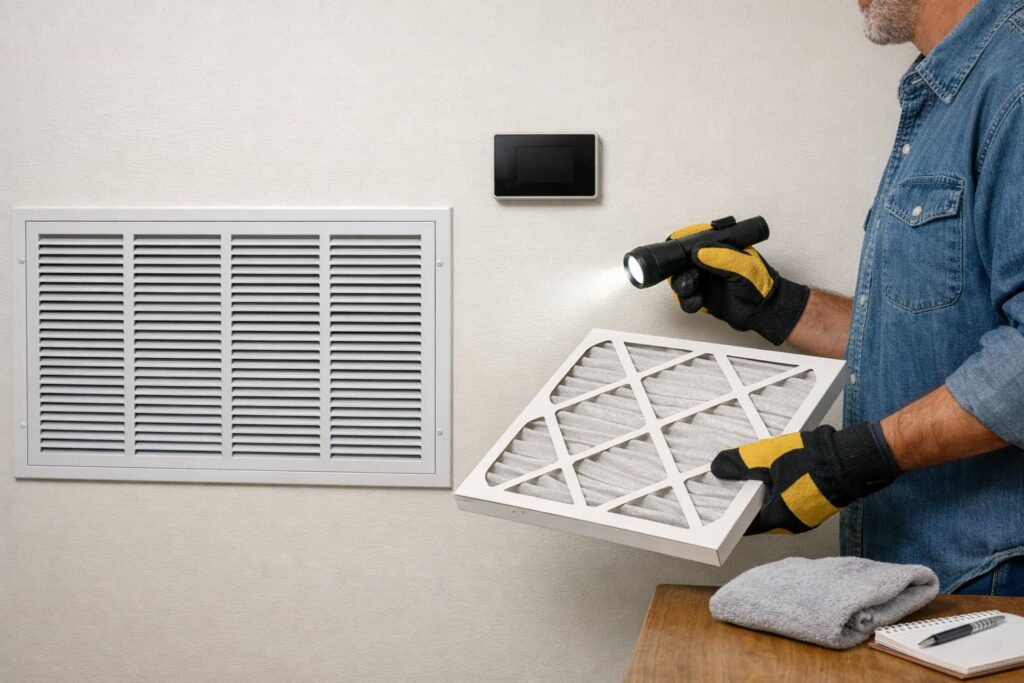
If you’re dealing with ac freezing up causes, here’s the reality: most AC freeze-ups start with low airflow (often a dirty filter or blocked return), or a refrigerant-side problem that needs an HVAC pro. The safe win is to stop the icing, restore airflow, then test—without damaging the coil.
Quick Checks First
- Turn COOL to OFF (don’t keep running it iced up).
- Let it thaw completely (don’t chip ice).
- Replace/check the filter + clear blocked return/supply vents.
- If it freezes again, stop and schedule service (often refrigerant/leak or deeper airflow).
Quick check: where is the ice showing up?
- Ice on the bigger insulated copper line near the indoor unit (or at the air handler): usually points to low airflow or a refrigerant-side issue.
- Weak airflow at vents + ice inside the indoor unit: strongly suggests an airflow restriction (filter/returns/supplies/coil/blower).
- Ice keeps returning after airflow fixes: treat it as service-needed (often refrigerant/charge/leak or deeper airflow problems).
What “AC freezing up” usually means
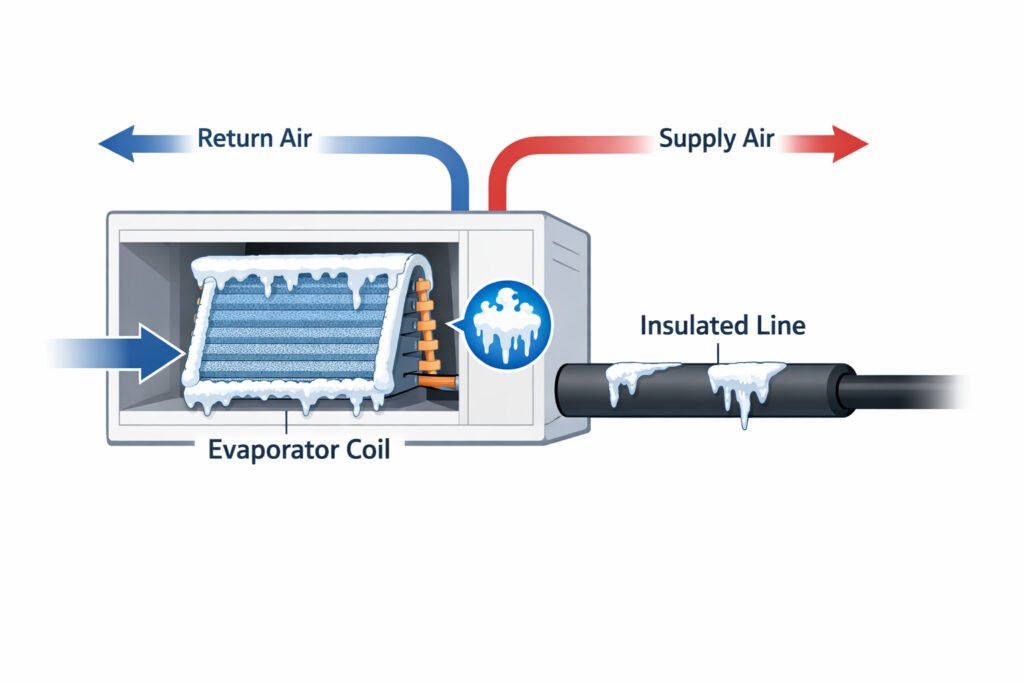
Your indoor evaporator coil gets cold to remove heat and humidity. When airflow is too low, the coil can get cold enough that moisture freezes on the coil, building ice that blocks airflow even more. Refrigerant-side issues (often low charge from a leak) can also drop coil temperature and cause icing.
For maintenance basics that affect airflow and coil performance, see U.S. Department of Energy — Air Conditioner Maintenance.
First response: stop the ice safely (no shortcuts)
1) Switch thermostat from COOL to OFF
This is the first move manufacturers recommend to prevent worsening the freeze-up.
Reference: Trane — What To Do If the AC Evaporator Coil Is Frozen
2) Let it thaw completely (don’t chip or scrape)
Chipping ice can damage delicate coil fins/tubing. Let it melt on its own.
Helpful manufacturer overview: Carrier — Will Frozen AC Fix Itself?
Avoid these shortcuts:
- Don’t chip/scrape the coil or line (easy to damage fins/tubing).
- Don’t use heat guns, hair dryers, or boiling water on HVAC components.
- Don’t keep restarting the system while ice is present—wait for a full thaw first.
3) Protect your home while it thaws
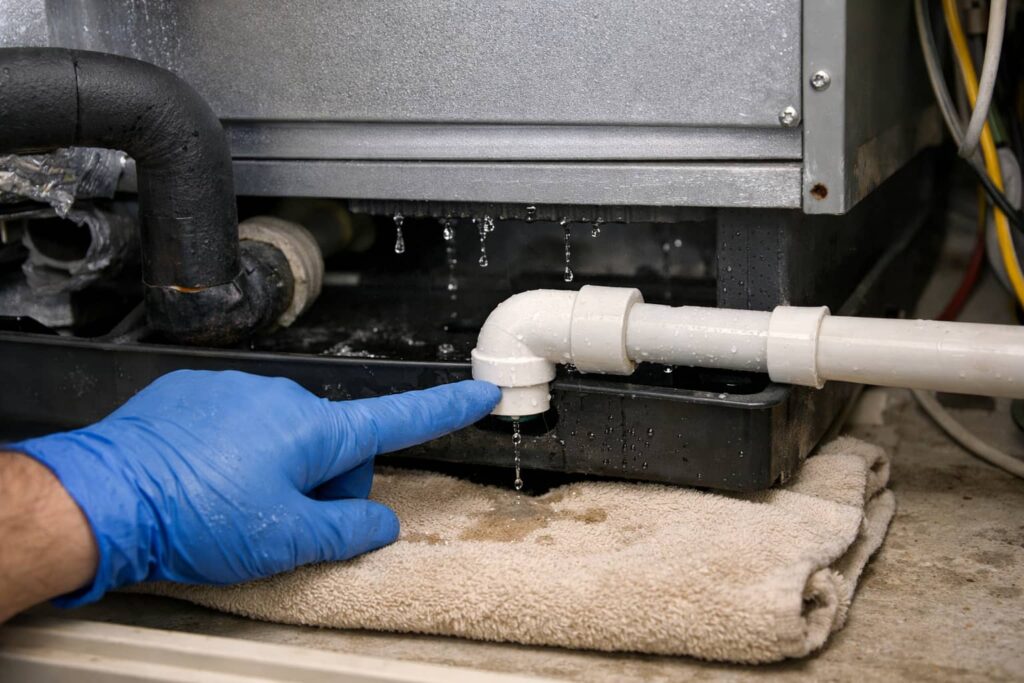
- Put towels down near the indoor unit if it’s accessible (melting ice can increase condensate).
- Don’t open panels you’re not meant to open.
- If water is near electrical components, stop and call a pro.
Also check the condensate drain (to prevent overflow):
As the ice melts, water has to drain away. If the condensate drain line or pan is clogged, you can end up with a leak even after the freezing cause is fixed. If you see water pooling around the indoor unit, keep cooling OFF and have a technician inspect the drain/pan and surrounding components—especially if water is near wiring.
The most common ac freezing up causes (with safe homeowner checks)
Cause 1: Dirty or restrictive air filter (most common)
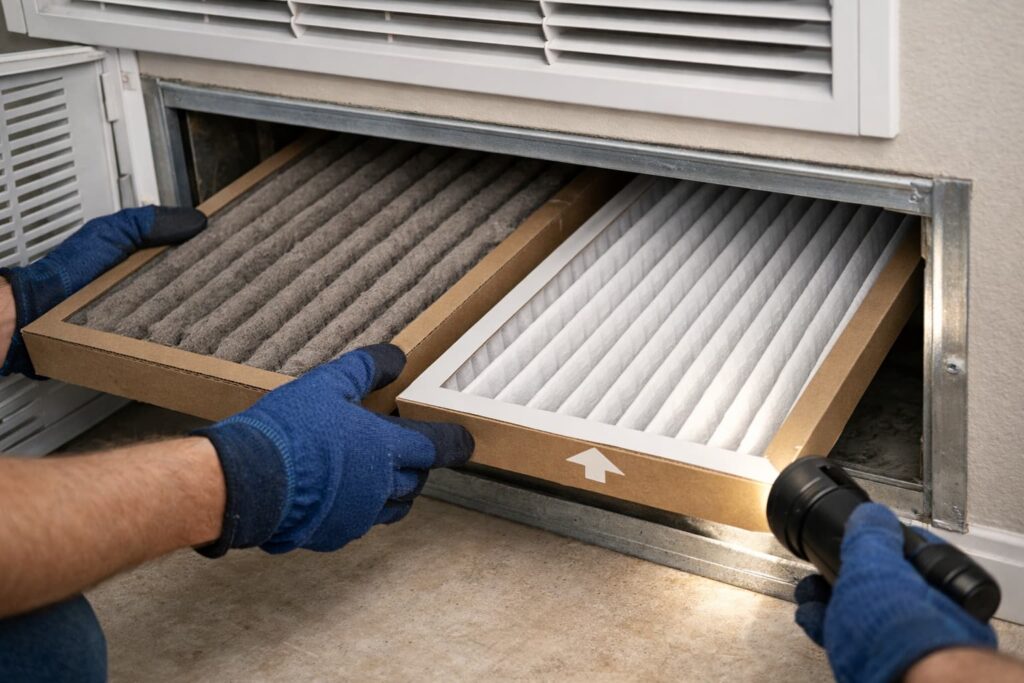
Why it freezes: Low airflow = coil gets too cold = ice forms.
Safe checks:
- Replace with the correct size filter and install it correctly (airflow arrow).
- If you’ve been using very high-restriction filters and freezing is recurring, ask your HVAC company what filter type your system is designed for.
More context on common AC problems tied to maintenance: U.S. Department of Energy — Common Air Conditioner Problems
Cause 2: Blocked return vent or closed/blocked supply vents
Why it freezes: Starved airflow across the coil.
Safe checks:
- Make sure return grilles are not blocked by furniture, rugs, curtains, or stacked items.
- Open supply vents and remove obvious obstructions.
Cause 3: Dirty evaporator coil (often needs service)
Why it freezes: Dirt can reduce heat transfer and contribute to airflow/temperature problems.
Safe boundary: If checking it requires removing major panels or working near wiring/refrigerant lines, leave it to a tech.
Cause 4: Blower/duct airflow issues (service usually needed)
Why it freezes: Weak blower, duct restriction, or collapsed/blocked ducting can cut airflow enough to ice the coil.
Clues it’s beyond DIY: airflow is weak at most vents, uneven cooling suddenly worsens, or freezing returns quickly even after a fresh filter and vent checks.
Cause 5: Low refrigerant charge (often from a leak) — pro-only
Why it freezes: Low refrigerant can drop coil temperature enough to ice.
What you can do safely: If it refreezes after airflow basics, turn it off and schedule service. Avoid “topping off” refrigerant—leaks must be addressed and refrigerant handling is regulated.
Regulatory boundary reference: EPA — Stationary Refrigeration: Prohibition on Venting Refrigerants
Troubleshooting steps that work (in the right order)
Step 1: Confirm a full thaw before testing
Ice left on the coil can make airflow and temperature readings misleading. Don’t rush the restart.
Step 2: Replace the filter (even if it looks “not that bad”)
Restriction isn’t always obvious by looks. This is the fastest, safest fix.
Step 3: Restore airflow through the whole house
- Clear return grilles and supply vents
- Don’t close multiple vents to “force air” elsewhere (that can reduce total airflow)
Extra airflow check many homeowners miss:
Make sure air can get back to the return. If interior doors are shut tightly and return airflow is limited, some rooms can become “airflow-starved,” reducing total system airflow. Opening doors (or ensuring there’s a clear return path) can help stabilize airflow while you troubleshoot.
Step 4: Do a short cooling test
After thaw + airflow fixes:
- Turn COOL back on and monitor for steady airflow.
- If you see frost/ice returning, turn it off and move to Step 5.
If it starts frosting again quickly:
That’s a strong sign the issue isn’t just “a little ice left.” Turn cooling OFF and move on to service scheduling—repeated refreezing can strain the system and risks bigger damage over time.
Step 5: If it refreezes, schedule HVAC service
At this stage, likely causes include refrigerant charge/leaks, blower performance issues, duct restrictions, or coil/drain problems that need tools and training.
Useful visual walkthrough of a frozen-coil situation and the common “airflow vs. refrigerant” decision points—helps readers know when it’s time to stop DIY and call a pro.
Good maintenance checklist reference: ENERGY STAR — Heating & Cooling Maintenance Checklist
What to tell the HVAC pro (so the visit is faster)
Share these details when you book service:
- Where you saw ice (indoor coil area vs. the insulated line)
- How long it takes to freeze after you restart cooling
- Filter size/type and when it was last changed
- Whether airflow at vents is weak everywhere or only in certain rooms
- Any unusual sounds, odors, water around the indoor unit, or recent thermostat changes
- Whether you’ve recently blocked/closed vents or moved furniture near returns
STOP / Call a pro (don’t push past these)
Stop troubleshooting and contact a licensed HVAC professional if:
- The system freezes again soon after filter + vent/return checks
- You notice hissing, oily residue near refrigerant lines, or signs of a leak
- There’s a burning smell, smoke, sparks, or repeated breaker trips
- Water is leaking near electrical components
- Any step involves refrigerant handling or opening sealed components (regulated + safety risk)
Keep it from freezing again (simple prevention)
Outdoor unit upkeep (safe DIY prevention)
Keep the outdoor unit clear of debris and allow proper airflow around it.
https://www.youtube.com/watch?v=9N1AIZJE8SA
This is Carrier’s official outdoor unit maintenance walkthrough—useful for preventing conditions that contribute to poor performance and icing.
Thermostat habits that reduce stress on the system
Avoid settings/usage patterns that keep the system running continuously when airflow or maintenance is marginal (the real fix is still airflow + proper service).
This ENERGY STAR video covers thermostat settings and efficiency basics that support comfort without encouraging risky DIY repairs.
For broader consumer basics on AC operation and comfort, see ASHRAE — Top Ten Things Consumers Should Know About Air Conditioning.
FAQs
Why does my AC freeze up even with a new filter?
A new filter helps, but freezing can still happen from blocked returns, dirty coils, blower/duct issues, or low refrigerant. If it refreezes after airflow checks, schedule service.
Will a frozen AC fix itself?
It can thaw, but the underlying cause usually remains. Turn cooling off to thaw and correct airflow; persistent freezing needs a professional diagnosis.
Is it safe to chip ice off the coil?
No. Manufacturers warn against chipping ice because it can damage the coil/fins. Let it thaw naturally.
Can low refrigerant really cause freezing?
Yes. Low charge (often due to a leak) is a common cause of coil icing and should be handled by a licensed HVAC pro.
Should I run the fan to melt the ice faster?
Follow your manufacturer’s guidance. The safest baseline is: cooling off, thaw fully, fix airflow, then test—don’t run it iced up.
What’s the fastest DIY fix for ac freezing up causes?
Replace the filter and clear airflow blockages (returns/supplies) after turning cooling off and letting the unit thaw completely.
Conclusion
Most ac freezing up causes boil down to airflow problems or refrigerant/system faults. Start with the safe sequence: turn COOL off, thaw fully, replace the filter, clear returns/vents, then test. If it refreezes, stop running it and book a licensed HVAC pro—fixing the root cause is how you prevent repeat icing and bigger damage.
Sources / References
- U.S. Department of Energy — Air Conditioner Maintenance
- U.S. Department of Energy — Common Air Conditioner Problems
- Trane — What To Do If the AC Evaporator Coil Is Frozen
- Carrier — Will Frozen AC Fix Itself?
- EPA — Stationary Refrigeration: Prohibition on Venting Refrigerants
- ASHRAE — Top Ten Things Consumers Should Know About Air Conditioning
- ENERGY STAR — Heating & Cooling Maintenance Checklist