

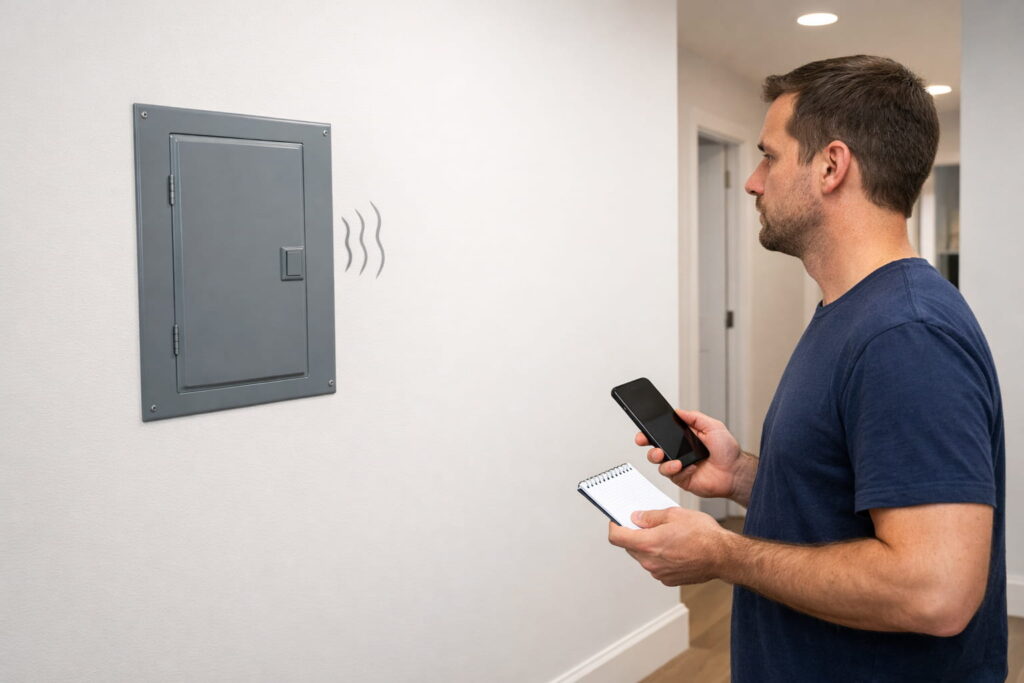
A circuit breaker buzzing sound can be harmless in some situations—but it can also signal a loose connection or arcing that needs urgent attention. If the buzzing is new, loud, changing, or paired with heat, burning smell, flickering lights, or repeated trips, treat it as dangerous and call a licensed electrician.
TL;DR — What to do right now
- Buzzing + burning smell/heat/smoke/sizzling/crackling/flickering/repeated trips: Turn off the breaker if you can do it safely, step back, and call a licensed electrician urgently.
- Buzzing is new or getting louder (even without other symptoms): Schedule an electrician soon.
- Very faint, steady hum that’s unchanged for a long time (no other symptoms): Monitor, but don’t ignore changes.
Why a circuit breaker can buzz (and when it’s “normal”)
Not all electrical noise means something is failing. Some breakers and panels can make a low, steady hum because of normal AC operation and internal magnetic vibration.
One manufacturer notes that a light hum can be expected, but excessive noise is often linked to issues like loose hardware, loose wiring, or components resonating under load. See the manufacturer explanation and checklist in Schneider Electric USA — Why Is My Equipment Humming?.
“Normal-ish” buzzing scenarios (still worth monitoring)
- A very faint, steady hum from the closed panel door that has been there for a long time
- A low hum from certain breaker types that stays consistent
- A mild increase in noise when big loads run (HVAC, dryer, oven), without any other warning signs
Even if it seems minor, any change (getting louder, happening more often, or starting suddenly) deserves attention.
When a circuit breaker buzzing sound is a danger sign
Buzzing becomes a bigger concern when it points to loose connections or arcing. Safety sources flag unusual electrical sounds like buzzing or sizzling as warning signs of a wiring hazard. Review the warning-sign list in U.S. Consumer Product Safety Commission — Guide to Home Wiring Hazards (PDF).
Another safety source explains that buzzing can occur when electricity “jumps” due to loose connections or damaged wiring, and recommends involving a professional. See UL — 8 signs you may have a problem with your electrical wiring.
Red flags that move this into “stop now” territory
Stop troubleshooting and treat it as urgent if you notice:
- Buzzing that’s loud, sudden, or getting worse
- Sizzling, crackling, popping, or any sound that seems “sparky”
- Burning smell, visible discoloration/scorching, or a hot panel door
- Lights flickering at the same time the buzzing happens
- Repeated breaker trips (especially on the same circuit)
Special case: AFCI breakers, dimmers, and a low hum
If the buzzing is coming from an AFCI breaker (arc-fault breaker), a low hum may be related to its electronics. Some dimmers and certain electronic loads can also make the sound more noticeable.
For that specific scenario, see Schneider Electric USA — Why Does My AFCI Hum?.
This ESFI video demonstrates what arc-faults can look like and why AFCIs are designed to shut power off before an electrical fire can start.
Important: “May be normal” does not mean “ignore it.” If it’s new, loud, or paired with heat, odor, flicker, or trips—treat it as unsafe.
Quick diagnosis: what your buzzing pattern is telling you
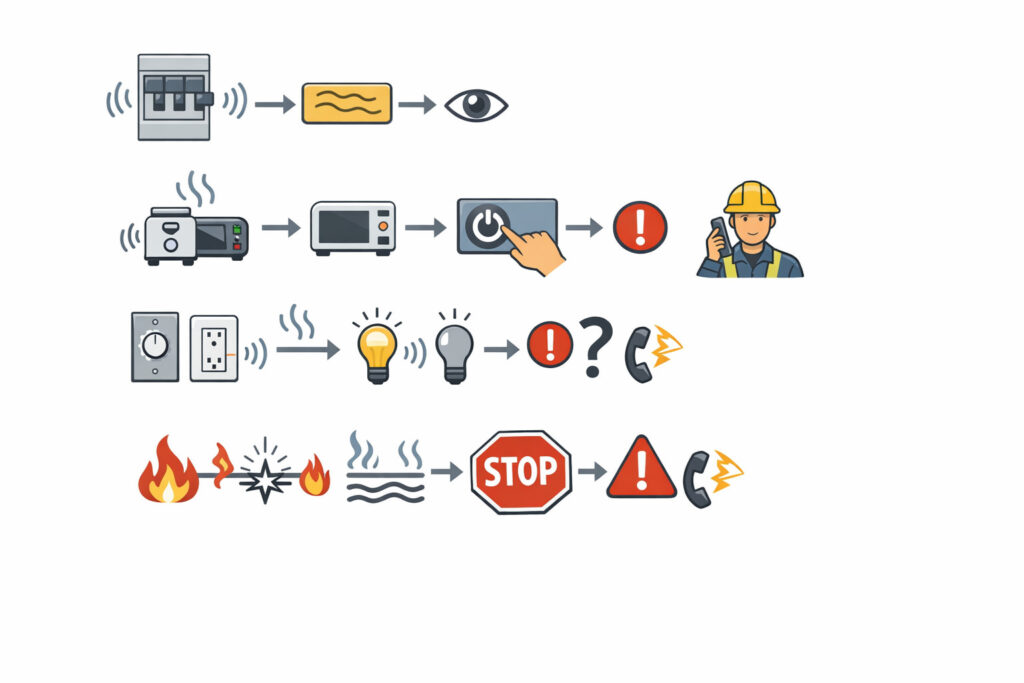
Use this simple map to decide what to do next—without opening the panel.
1) Faint hum that’s always there (no other symptoms)
Most likely: normal vibration or mild resonance.
Best next step: monitor for changes. If it’s “excessive” compared with normal, call an electrician to inspect.
2) Buzzing happens only when one appliance runs
Most likely: the circuit is under heavy load, or there’s a loose connection that reacts under load.
This pattern can also happen when a circuit is overloaded or a connection is starting to fail and only acts up under higher current.
Best next step: turn that appliance off at its normal control (or unplug it if safe), then see if the buzzing stops. If it clearly tracks one load, call an electrician.
3) Buzzing plus dimmer use (especially on AFCI-protected circuits)
Most likely: interaction between AFCI electronics and a dimmer/electronic load.
Best next step: set the dimmer to full bright, then off, and see if the buzzing changes. If it’s mild and consistent, it may be expected. If it’s loud/new or accompanied by other symptoms, call an electrician.
4) Buzzing that sounds like arcing (angry, sizzling, crackly)
Most likely: loose connection or damage causing arcing.
Best next step: stop and call an electrician urgently.
First, confirm where the buzzing is coming from (panel vs breaker vs meter)
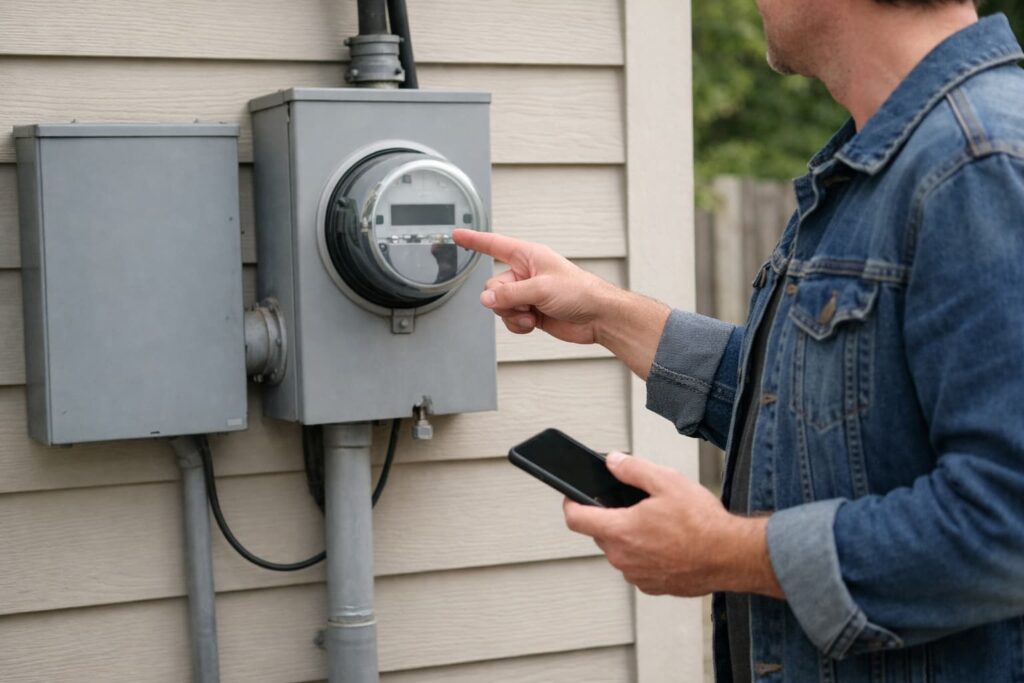
Before you assume it’s the breaker, do a quick “location check” from a safe distance (no cover removal):
- Inside the electrical panel area: Often points to a breaker, bus connection, or something resonating under load.
- At the electric meter or service cable area (outside): This can be a utility-side issue. Do not touch anything—step back and call your utility company or an electrician.
- At one specific device (dimmer switch, outlet, appliance cord): Stop using that device and have it inspected, especially if there’s heat, odor, or discoloration.
Safe checks you can do (no panel work, no cover removal)
These checks stay on the “homeowner-safe” side of the line.
Listen and observe—then write it down
- Does the sound come from one breaker area or the panel generally?
- Is it constant or only under certain conditions (HVAC starts, microwave runs, dryer heats)?
- Does anything else happen at the same time (light flicker, smell, warmth, tripping)?
A simple log helps an electrician diagnose faster.
Reduce load safely
If the buzzing occurs when multiple large loads run:
- Turn off or pause one major appliance at a time using normal controls
- Avoid running multiple high-demand appliances simultaneously until it’s checked
Check for obvious heat or odor (without touching exposed parts)
- Do not open the panel
- From a safe distance, check for heat at the panel door or any burning smell
- If you suspect heat/odor: stop and call a pro
Stop and call a licensed electrician immediately
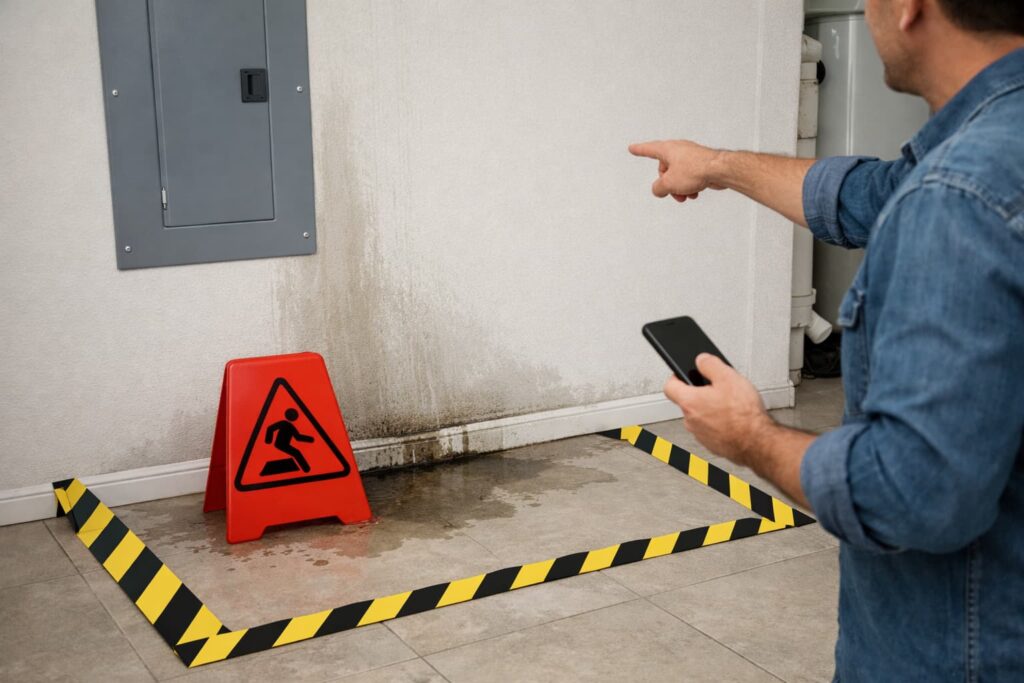
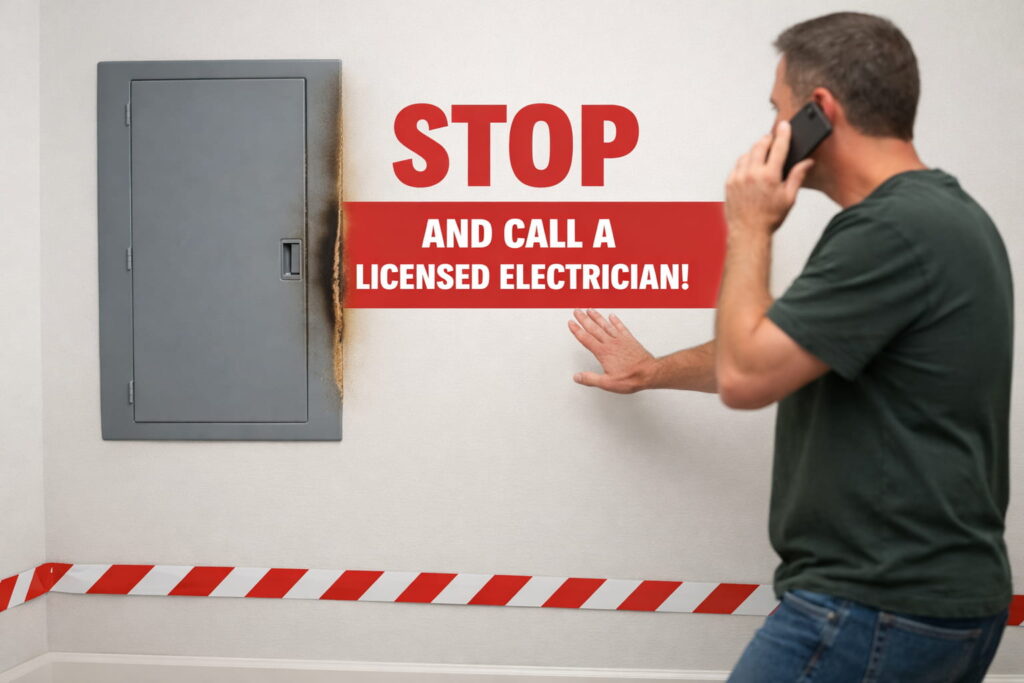
Do not continue troubleshooting if any of these apply:
- Buzzing is loud, sudden, changing, or getting worse
- The panel, meter, or nearby wall/floor area is wet (leak, flooding, condensation, or damp drywall). Water + electricity is a serious shock/fire risk—step back and call a licensed electrician.
- You hear sizzling/crackling/popping
- There’s burning odor, smoke, scorching, or the panel feels hot
- The breaker trips repeatedly
- You suspect wiring damage or arcing (a known fire-risk pathway)
Arc-faults can be caused by things like damaged wiring or defective cords/appliances; for general electrical fire safety background, see NFPA — Electrical Safety in the Home.
This ESFI video explains how AFCIs help prevent fires caused by dangerous arcing—useful context for why buzzing with other symptoms should be treated seriously.
If you see smoke, sparks, or active arcing, treat it as an emergency. If it’s safe to do so, shut power off, get everyone away from the panel, and contact emergency services.
What not to do (important safety boundaries)
- Do not remove the panel cover or tighten connections inside the panel
- Do not “upgrade” to a larger breaker to stop trips
- Do not keep resetting a breaker that trips repeatedly
- Do not ignore buzzing that is new, loud, or paired with heat/odor/flicker
What an electrician will likely check
A licensed electrician can safely inspect things you shouldn’t, such as:
- Whether any connections are loose
- Whether a breaker is failing
- Whether there’s evidence of overheating or arcing
- Whether the circuit load is appropriate for the wiring and breaker protection
- Whether a specific device (like a dimmer or appliance) is contributing to the issue
FAQs
Why is my circuit breaker buzzing but not tripping?
A mild, steady hum can sometimes be normal, but buzzing can also indicate a loose connection or arcing even before a trip happens. If it’s new, loud, or paired with heat/odor/flicker, call an electrician.
Is a circuit breaker buzzing sound a fire hazard?
It can be. Unusual buzzing or sizzling can be a warning sign of arcing or overheating, which increases fire risk. Treat “new or loud” buzzing as urgent.
Can an AFCI breaker make a humming sound?
Yes, some AFCI breakers can produce a low hum due to their electronics, and certain dimmers/electronic loads can make it more noticeable. If it’s loud or changing, get it checked.
Should I turn off the main breaker if I hear buzzing?
If you have red flags (burning smell, heat, smoke, sizzling/crackling, repeated trips), stopping the power can be appropriate—only if you can do it safely and without going near suspected heat or damage. When in doubt, step back and call an electrician.
Why does the buzzing happen when my AC or dryer turns on?
Large loads can make existing looseness or resonance more noticeable, and problems can show up under load. If buzzing reliably happens with a specific appliance, stop running it and schedule an electrician.
Can I fix a buzzing breaker myself?
If the “fix” involves opening the panel or tightening internal connections, no—leave that to a licensed electrician. You can safely observe patterns, reduce load, and stop using suspect appliances, but don’t do panel work.
What’s the difference between a normal hum and dangerous buzzing?
A normal hum is usually faint and steady with no other symptoms. Dangerous buzzing is often louder, new, changing, or accompanied by sizzling/crackling, heat, odor, flicker, or tripping.
Conclusion
A circuit breaker buzzing sound isn’t always a crisis—but it’s never something to brush off. If it’s faint and unchanged, monitor it. If it’s new, loud, tied to flicker or trips, or comes with heat/odor, stop and call a licensed electrician.