

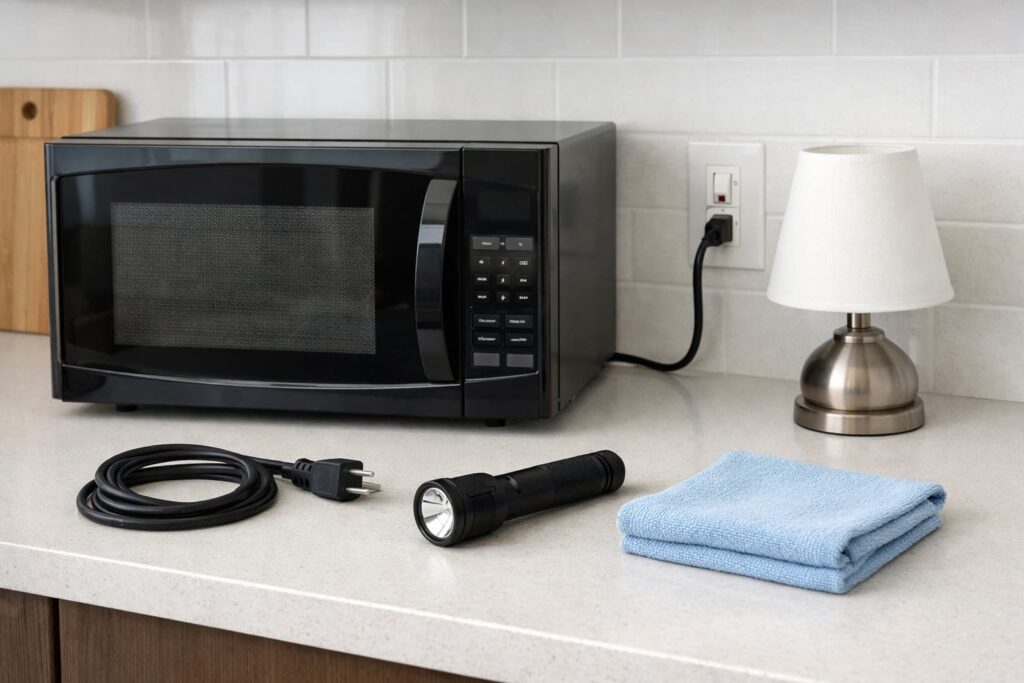
If your microwave trips gfci outlet, don’t ignore it. Unplug the microwave, reset and test the GFCI with a lamp/nightlight, and stop using that outlet if the trip repeats or the GFCI won’t test/reset correctly. That combination can point to a real shock hazard, a failing GFCI, a wiring problem, or a microwave fault.
(safe path): Unplug microwave → reset GFCI → lamp-test the GFCI → if it fails, call an electrician → if it passes but the microwave re-trips it, stop and schedule microwave service/electrician evaluation.
First: confirm it’s the GFCI (not the breaker)
These problems can look similar, but the fix is different:
- GFCI trip: The outlet’s RESET button pops out (or power cuts at that outlet and possibly other outlets it protects), while the breaker in the panel may remain on.
- Breaker trip: A breaker in the electrical panel is off or in a tripped middle position.
If you’re unsure, start at the outlet: if it has TEST/RESET, it’s a GFCI (or protected by one upstream).
Also check for a “GFCI/AFCI breaker” in your panel: In some homes, the protection isn’t a GFCI outlet at all—it’s built into a breaker (sometimes labeled GFCI, AFCI, or dual-function). If the outlet has no TEST/RESET buttons but power still cuts during microwave use, look for a tripped breaker and reset it once. If it trips again, stop and call an electrician.
Safety rules before you do anything
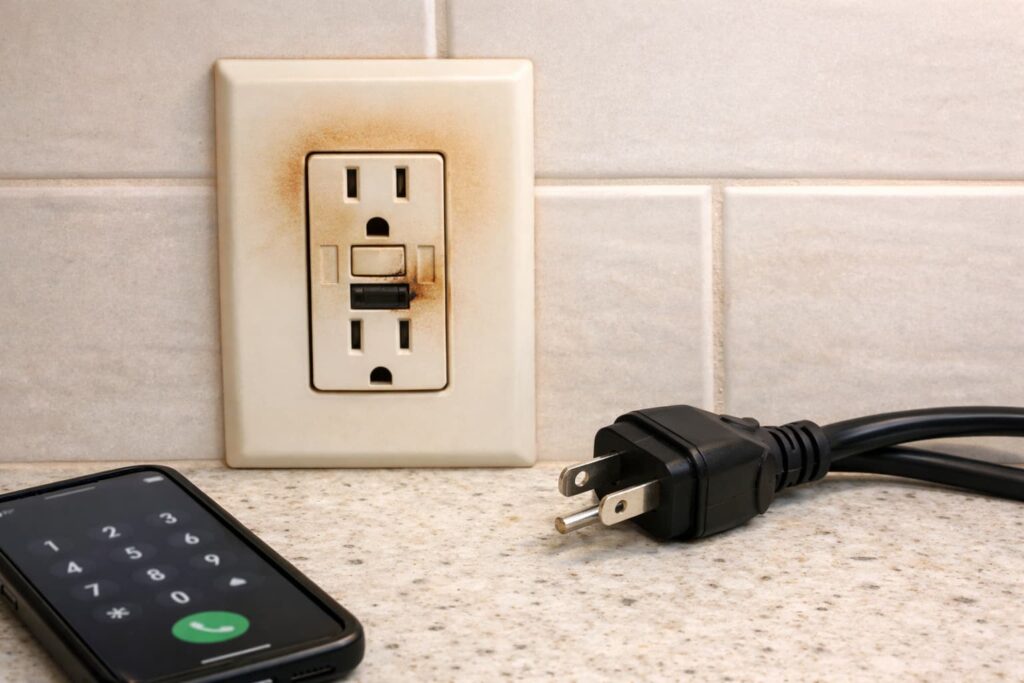
Stop and switch to “call a pro” mode if you notice:
- Burning smell, scorch marks, buzzing/crackling, or the outlet feels warm/hot
- The GFCI won’t reset or won’t stay reset
- The microwave cord/plug is damaged, melted, loose, or discolored
- There’s water/steam exposure near the outlet (recent cleaning splash, heavy steam from cooking, etc.)
If any of the above is true, unplug the microwave only if it’s safe, don’t keep resetting, and contact an electrician.
Also: don’t open the microwave cabinet for DIY repair. Microwaves have high-voltage components that can be dangerous even when unplugged.
Don’t “solve” this by bypassing protection. Avoid moving the microwave to an unprotected outlet as a workaround or swapping outlets yourself. If a GFCI is tripping, it’s either detecting a real hazard or it needs attention—either way, the safe fix is diagnosis, not bypassing.
Why a microwave can trip a GFCI outlet
A GFCI is designed to shut off power when it detects current leakage that could cause electric shock. When a microwave trips it, the usual causes are:
1) The microwave (or its cord/plug) is leaking current
This can be due to internal wear/failure, damaged insulation in the cord/plug, or moisture/contamination.
2) The GFCI outlet is weak, failing, or more prone to nuisance tripping
Some appliance electronics can create leakage patterns and electrical “noise” that certain GFCIs handle poorly. The appliance industry has discussed nuisance tripping and general compatibility concerns in AHAM — GFCI Tripping, and there are ongoing technology/code discussions around high-frequency behaviors in UL Code Authority — High-Frequency Ground-Fault Circuit Interrupters.
3) There’s a wiring/device problem at the receptacle or circuit
Examples include a miswired GFCI, loose connections, moisture in the box, or other circuit issues—these are electrician territory.
Safe troubleshooting: step-by-step (no risky repairs)
Step 1: Unplug the microwave, then reset the GFCI
Unplugging the suspected device is a core first step so you can isolate what’s causing the trip, as described in Leviton — GFCI Trip Application Note (PDF).
- Unplug the microwave.
- Press RESET on the GFCI.
- If it won’t reset, jump to “When to stop and call an electrician or appliance service.”
Step 2: Test the GFCI with a lamp/nightlight (the most useful homeowner test)
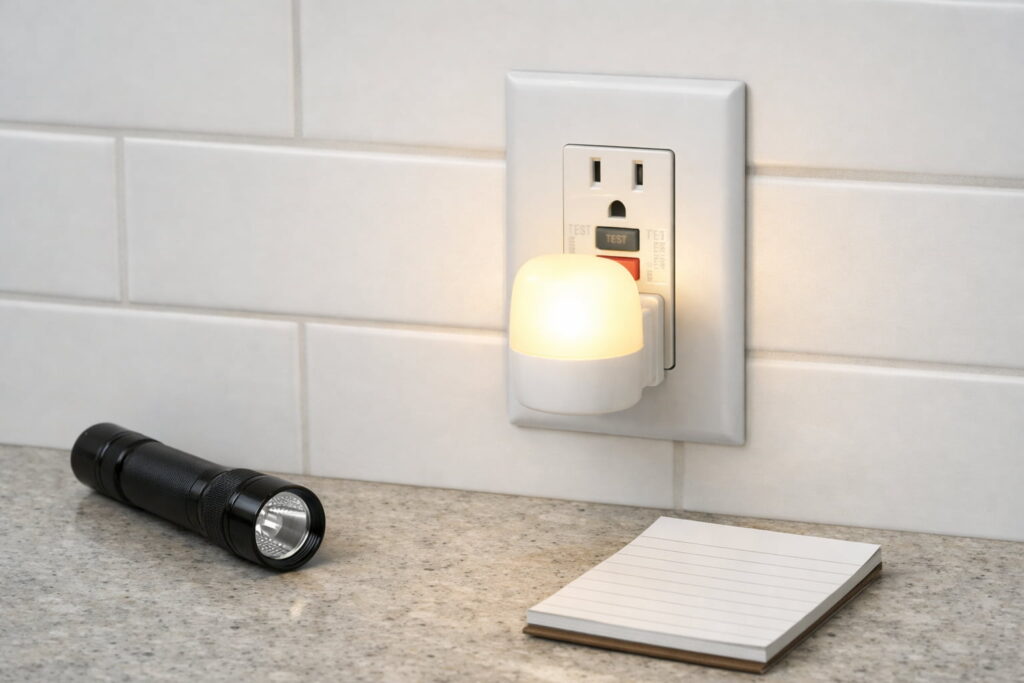
This test confirms the GFCI can trip and restore power correctly.
Follow the procedure in U.S. CPSC — GFCI Fact Sheet (PDF):
- Plug a lamp/nightlight into the GFCI outlet and turn it on.
- Press TEST: the light should go out.
- Press RESET: the light should come back on.
If it doesn’t behave that way, treat it as faulty or improperly wired and call an electrician.
This official Leviton video shows a straightforward test/reset routine that matches the “verify the GFCI works before blaming the microwave” step.
Optional isolation check (quick and safe): If the GFCI passes the lamp/nightlight test, you can plug the microwave into a different, known-good GFCI-protected outlet on another circuit (no extension cord or power strip) to see if the problem follows the microwave.
- If it trips a second GFCI, the microwave is more likely the issue.
- If it only trips one location, that outlet/circuit may be the issue.
If you’re unsure which outlets are on different circuits, skip this step and call an electrician.
Step 3: Check simple external triggers (no tools, no disassembly)
Before plugging the microwave back in:
- Dryness check: If there was steam or splashing near the outlet, let everything dry completely.
- Cord/plug check: Look for nicks, discoloration, melting, bent blades, or looseness.
- No adapters/power strips: Plug the microwave directly into the wall outlet.
- Loose outlet feel: If the plug doesn’t fit snugly, stop and call an electrician.
Check what else loses power when it trips: If the microwave outlet is on the LOAD side of a GFCI (or protected by an upstream GFCI), other outlets may be on the same protection. Unplug other plugged-in devices on those dead outlets too—multiple devices on the same protected circuit can make diagnosing the true trigger harder.
Step 4: Plug the microwave in (don’t start cooking yet)
- Plug it in.
- If the GFCI trips immediately just from plugging in, stop—this can point to a fault condition or wiring issue.
Step 5: Run one short, controlled test
If the GFCI stayed on with the microwave plugged in:
- Run a short heating cycle while you stay nearby.
- If it trips again, don’t keep repeating tests.
At this point:
- GFCI passes lamp test + trips when microwave runs → the microwave likely needs service, or an electrician should evaluate circuit/device compatibility and wiring.
- GFCI fails lamp test → fix the GFCI/wiring first.
For manufacturer-style escalation guidance (reset first, then service if it keeps happening), see GE Appliances — AFCI, GFCI and GFI Use.
Troubleshooting map: what you see → what it usually means
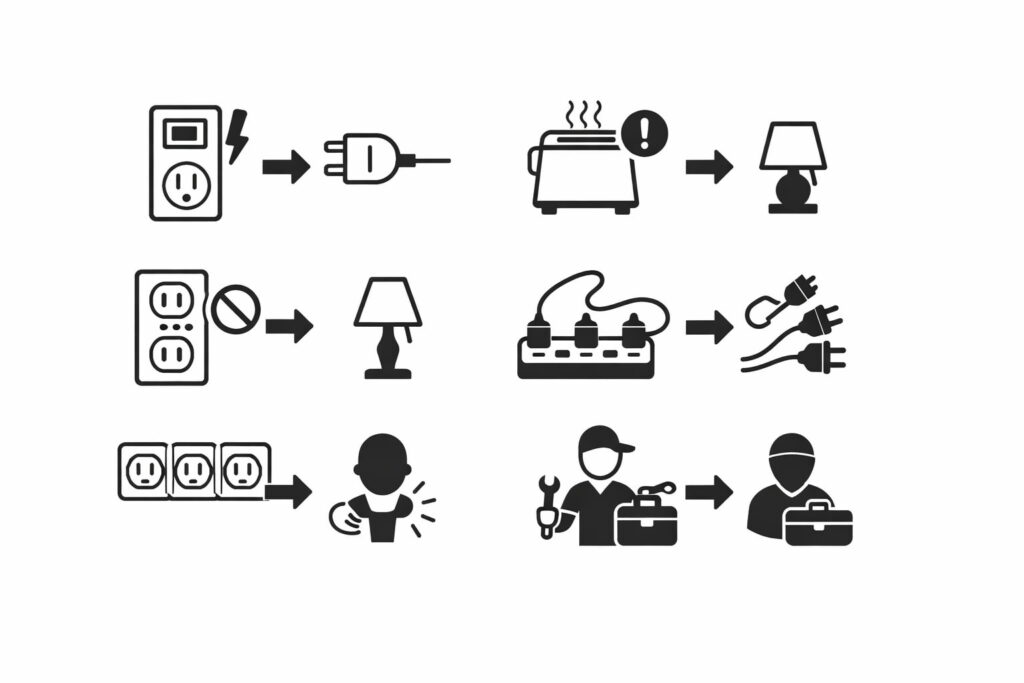
Microwave trips the GFCI immediately when you press START
Usually means: a fault under load, damaged cord/plug, failing GFCI, or wiring issue.
Safe check: Unplug → lamp-test the GFCI.
Next step: If the GFCI passes, stop using the microwave and schedule service; if it fails, call an electrician.
Microwave runs briefly, then trips
Usually means: leakage becomes more pronounced during heating, or there’s moisture/steam exposure near the outlet.
Safe check: Dry the area, plug directly into the wall, lamp-test the GFCI, then try once more.
Next step: If repeatable, stop and call a pro.
GFCI won’t reset (or resets but won’t hold)
Usually means: something is still faulting on that GFCI (or downstream), or the GFCI/wiring is defective.
Safe check: Unplug everything on that GFCI (and any outlets it protects), then try RESET again.
Next step: If it still won’t reset or fails the lamp test, call an electrician.
Multiple kitchen outlets are dead after the trip
Usually means: one upstream GFCI is protecting multiple downstream outlets.
Safe check: Find other GFCIs in the kitchen/garage/basement/bathrooms/exterior and press RESET; then do the lamp test.
A simple consumer refresher is ESFI — Ground Fault Circuit Interrupters (GFCI).
When to stop and call an electrician or appliance service
Call an electrician if:
- The GFCI fails the lamp test (TEST/RESET doesn’t behave correctly), per the guidance in the CPSC fact sheet
- The outlet is warm, damaged, loose, crackling, or shows scorching
- The GFCI won’t reset or won’t stay reset after unplugging everything
- The issue affects multiple appliances/outlets on the same protected circuit
This official Leviton “Answer Series” video reinforces what to do after a trip and why repeated tripping is a reason to stop and get help.
Call appliance service if:
- The GFCI passes the lamp test, but the microwave repeatedly trips it
- The microwave trips GFCIs in more than one location
- The microwave cord/plug shows any damage
For a general safety reminder about periodic checking, NFPA — 5 Ways to Check Ground Fault Circuit Interrupters aligns with the same test-and-escalate approach.
What to write down before you call (saves time):
- Does it trip immediately on START or after heating for a bit?
- Does the GFCI pass the lamp/nightlight test?
- Does it trip only this outlet or multiple GFCIs/locations?
- Any recent changes: new microwave, outlet replacement, kitchen remodel, heavy steam/cleaning near the outlet?
- Any warning signs: heat, buzzing, burning smell, loose plug fit, visible damage?
Preventing repeat trips (safe, realistic tips)
- Keep the receptacle area dry; avoid heavy steam exposure right under/next to the outlet.
- Don’t use extension cords, adapters, or power strips with a microwave.
- Test GFCIs periodically; replace any unit that doesn’t test/reset correctly.
- If a specific microwave + GFCI combination repeatedly trips, an electrician can evaluate whether the device/circuit setup is appropriate and whether the GFCI itself should be updated.
FAQs
Why does my microwave trip the GFCI but my toaster doesn’t?
Microwaves can behave differently under load and may produce leakage patterns that trip a GFCI even when other devices don’t. If the GFCI passes a lamp test but trips with the microwave repeatedly, stop using it and schedule service/evaluation.
Can I use an extension cord or power strip to stop the tripping?
No—don’t use an extension cord, adapter, or power strip with a microwave. Plug it directly into the wall outlet and focus on diagnosing why the GFCI is tripping instead of trying to “work around” it.
Is it safe to keep resetting the GFCI and trying again?
No. If it trips more than once in the same scenario, unplug the microwave and do the lamp test. Repeated trips can indicate a real fault.
What if the GFCI won’t reset at all?
Unplug everything on that GFCI (and any outlets it protects downstream) and try again. If it still won’t reset or fails a lamp test, call an electrician.
Can a microwave be “bad” even if it still runs sometimes?
Yes. Intermittent leakage can trip a GFCI while the microwave otherwise seems normal—until it trips again.
Does a tripping GFCI automatically mean I need a new microwave?
Not always. First confirm the GFCI works correctly with a lamp test. If the GFCI is good and the microwave consistently trips it, appliance service is the right next step.
Could this be a wiring problem instead of the microwave?
Yes. A failed lamp test points strongly toward a GFCI/wiring issue, and an electrician should investigate.
Should a microwave be plugged into a GFCI outlet?
In many kitchens, countertop receptacles are GFCI-protected by design for shock safety. If your microwave trips that protection, the safest approach is to test the GFCI and investigate the cause—rather than trying to bypass the protection.
Conclusion
When a microwave trips gfci outlet, the safest move is to pause, test, and narrow it down—without risky repairs. Unplug the microwave, lamp-test the GFCI, and stop if the outlet won’t test/reset correctly or the microwave triggers repeat trips. From there, an electrician or appliance service can pinpoint whether the issue is the outlet/circuit or the microwave itself.
Sources / References
- Leviton — GFCI Trip Application Note (PDF)
- GE Appliances — AFCI, GFCI and GFI Use
- U.S. CPSC — GFCI Fact Sheet (PDF)
- ESFI — Ground Fault Circuit Interrupters (GFCI)
- NFPA — 5 Ways to Check Ground Fault Circuit Interrupters
- AHAM — GFCI Tripping
- UL Code Authority — High-Frequency Ground-Fault Circuit Interrupters