

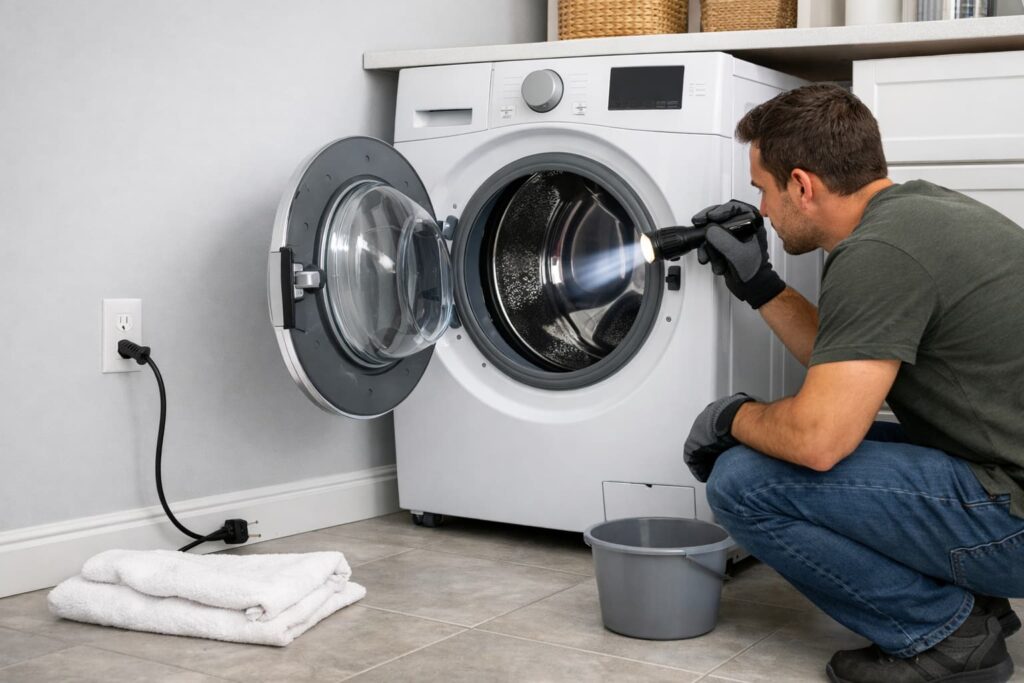
If your washer smells like sewage, the odor is usually coming from either (1) buildup inside the washer or (2) sewer gas backing up from the laundry drain—so the fix depends on where the smell is strongest. Start by pinpointing the source, then use the safe steps below.
Stop and call a pro if any of these are true
Stop troubleshooting and get help if you notice any of the following:
- A strong “rotten egg” odor that could indicate a gas issue. Leave the area and contact your gas utility or emergency help.
- You see leaking wastewater, soggy drywall, or wet flooring around the laundry drain.
- The smell seems to be coming from inside a wall/floor, or you can’t identify the source.
- You feel unwell while investigating odors (headache, nausea, dizziness). Ventilate and step outside.
- You would need to open walls, alter plumbing, or work with electrical panels to continue.
For persistent sewer-gas concerns, the Wisconsin Department of Health Services explains common sources and why professional diagnosis is often necessary when the entry point isn’t obvious: Wisconsin Department of Health Services — Sewer Gas.
Quick diagnosis: where is the smell strongest?
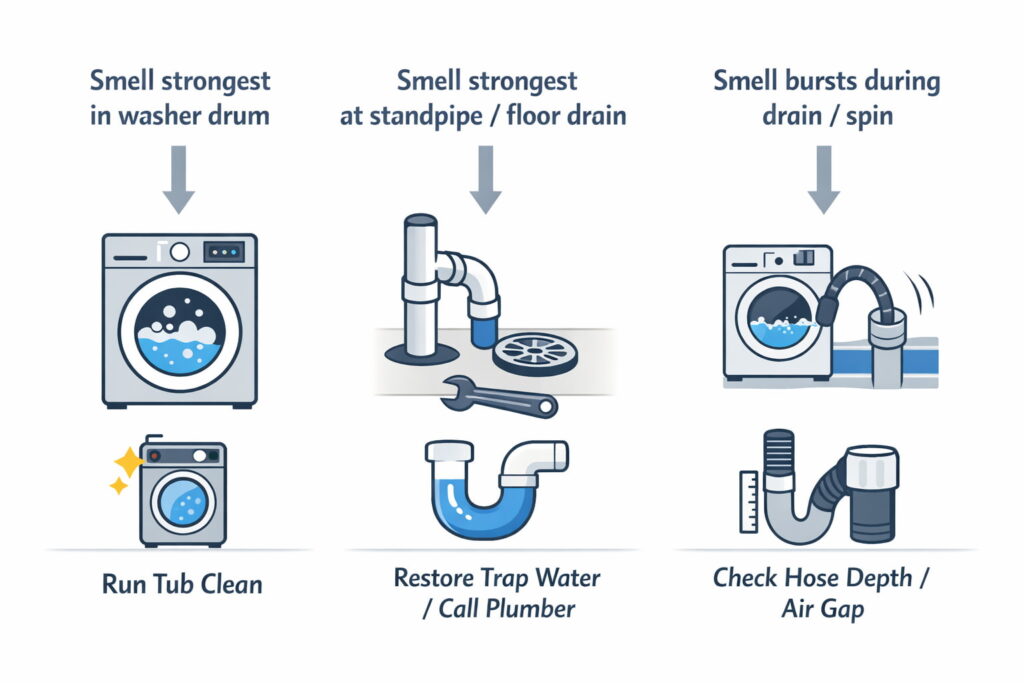
Use this 2-minute “sniff map” (yes, really) to avoid doing the wrong fix.
If the smell is strongest…
- Inside the washer drum / door area: likely washer buildup (biofilm, mildew, detergent residue).
- At the standpipe (the vertical drain pipe), wall drain box, or floor drain: likely sewer gas or drain odor from plumbing.
- Only during/after draining and spinning: often a drain/standpipe issue that gets worse when a large volume of water rushes through.
Tip: If the laundry room smells “sewage-y” even when the washer hasn’t run in days, that’s a strong hint it’s plumbing-related.
Extra clue: If the washer smells like sewage and your clothes come out smelling the same, it often points to buildup inside the washer or trapped residue in hidden areas (gasket/dispenser/drain path). If the room smells worse than the clothes, it more often points to the standpipe/floor drain area.
Why a washer smells like sewage (the most common causes)
1) Buildup inside the washer (biofilm and residue)
Even if you use good detergent, small amounts of soil + soap scum + moisture can create a stubborn odor film in hidden areas (tub, gasket/boot folds, dispenser, drain path). Many manufacturers recommend using the washer’s built-in cleaning cycle regularly to prevent this.
2) Sewer gas entering from the laundry drain
Laundry drains typically rely on a water seal (a “trap”) and proper venting to block sewer gases. If that seal dries out, siphons out, or there’s a venting problem, sewer gas can enter the room—sometimes strongest near the standpipe or floor drain.
3) A drain connection or hose issue
Loose/poor connections or a partially blocked drain path can let odor escape right where the washer discharges water.
4) Cleaning mistakes that create harsh odors or fumes
Mixing products (or using too much) can create a “chemical sewage” smell and can be unsafe. Follow the safety guidance from the CDC — How to Safely Clean and Sanitize with Bleach and never mix cleaners.
Step-by-step fixes (start with the safest, easiest)
1) Ventilate first (always)
- Open a window/door if possible.
- Run the bathroom exhaust fan (if it vents outside) or a room fan pointed out of the space.
- Keep kids/pets out of the laundry area while you troubleshoot odors.
2) Fix washer-side odors (inside the machine)
If the smell is strongest in the drum or around the door/lid area, do this first.
A) Run the washer’s cleaning cycle the way the manufacturer recommends
Many washers have a “Clean Washer” or “Tub Clean” cycle designed to flush residue and odor-causing buildup. Whirlpool’s guidance is a good example of the overall approach: run a recurring cleaning cycle and allow the washer to dry afterward. See: Whirlpool Product Help — Removing Odors from the Interior of a Washer.
Important: Don’t guess with chemicals. Use only what your washer’s manual/brand support page allows for the clean cycle (some allow specific cleaners; some allow chlorine bleach; others prefer oxygen-based cleaners).
Use this official LG video to see what “Tub Clean” looks like on a real control panel so you can run the right cycle for your model.
https://www.youtube.com/watch?v=8ncMgEN4Z38
Use this official affresh video for a clear visual of the “clean cycle + washer cleaner” method many Whirlpool-family brands recommend.
B) Clean the “hidden stink spots”
These areas commonly hold residue and stagnant moisture:
- Front-load rubber door gasket/boot: gently wipe inside folds (look for trapped lint/soap).
- Door boot drain holes (front-loaders): Some door gaskets have small drain ports at the lowest point. If they’re clogged with lint/soap residue, water can sit and stink. Wipe the area clean and remove visible debris—don’t force tools into holes you can’t clearly see.
- Detergent dispenser drawer and housing: remove the drawer (if it’s designed to come out) and clean away slime/soap buildup.
- Drain pump filter / coin trap (if your washer has one): Many front-loaders (and some compact units) have a small access door near the bottom front. Lint, hair, and gunk can collect there and cause a strong funk. Only check/clean this if your owner’s manual shows a pump filter—and put towels/shallow pan down first because water may drain out.
- Door glass and lip area: wipe and dry.
LG’s official guidance includes cleaning steps and maintenance tasks like Tub Clean and dispenser-area care: LG Support — How to Clean the Tub of Your LG Washing Machine.
C) Change the habits that make odors come back
- Leave the door/lid cracked open after loads so the interior dries.
- Remove wet laundry promptly.
- Use the right detergent amount (overdosing can leave residue that feeds odors).
- If you frequently wash cold, run a hot cycle (or the manufacturer’s clean cycle) periodically to reduce buildup.
This GE Appliances maintenance video helps you see the routine wipe-down and airflow habits that reduce repeat odors.
3) Fix plumbing-side “sewage” odors (standpipe, drain box, or floor drain)
If the smell is strongest near the drain area, focus here.
A) Check for a dry floor drain (quick win in many laundry rooms)
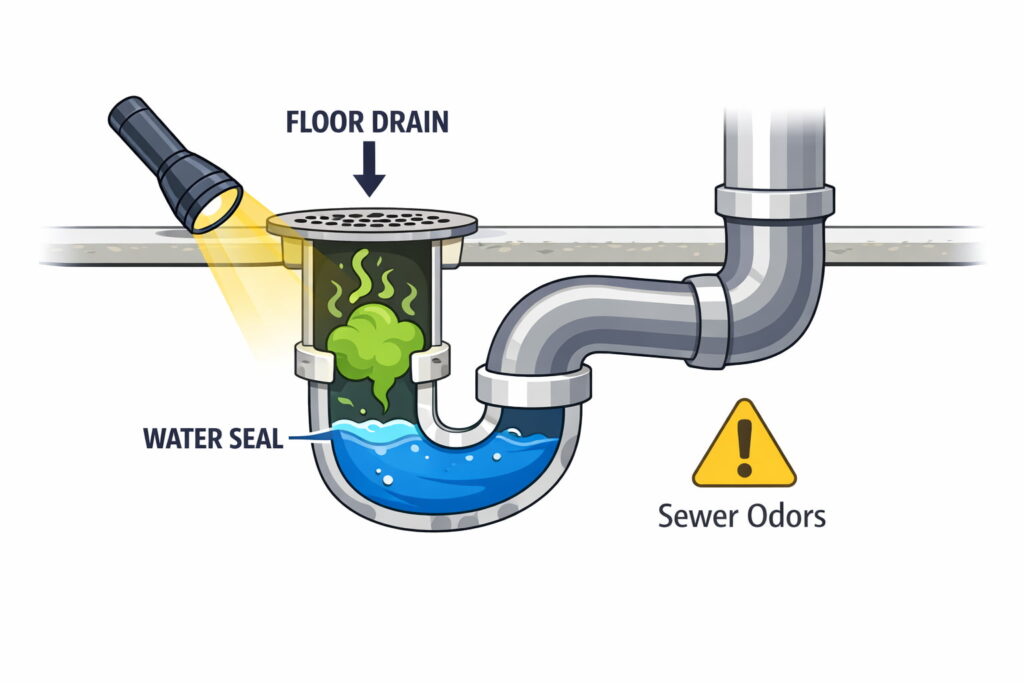
If you have a floor drain nearby that’s rarely used, the water seal can evaporate and allow sewer odors into the room.
- Shine a flashlight into the floor drain.
- If it looks dry, run water in it briefly to restore the water seal.
- Re-check the smell over the next few hours.
Also check any nearby utility sink in the laundry area. If the sink hasn’t been used in a while, its drain trap can dry out and let odors into the room. Running water briefly can restore the water seal.
B) Inspect for obvious leaks or loose connections
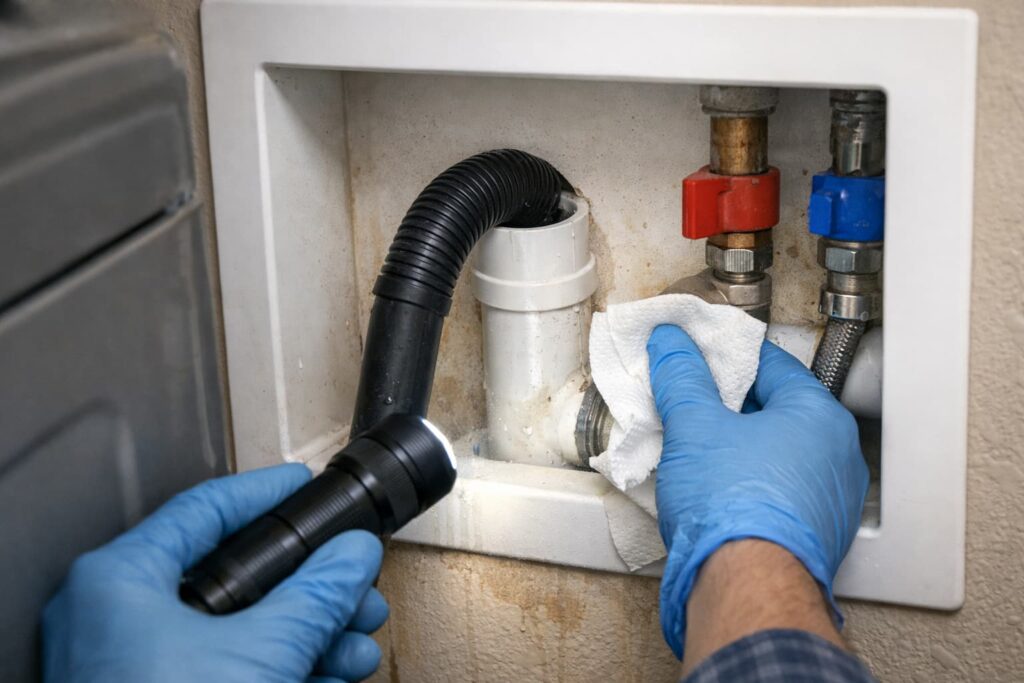
Look around:
- The standpipe opening where the washer drain hose enters
- Any wall drain box
- The floor behind/under the washer
If you see moisture, staining, soft drywall, or ongoing seepage, stop and call a plumber.
C) If odors “puff” out during draining/spin, treat it as a venting/drain issue
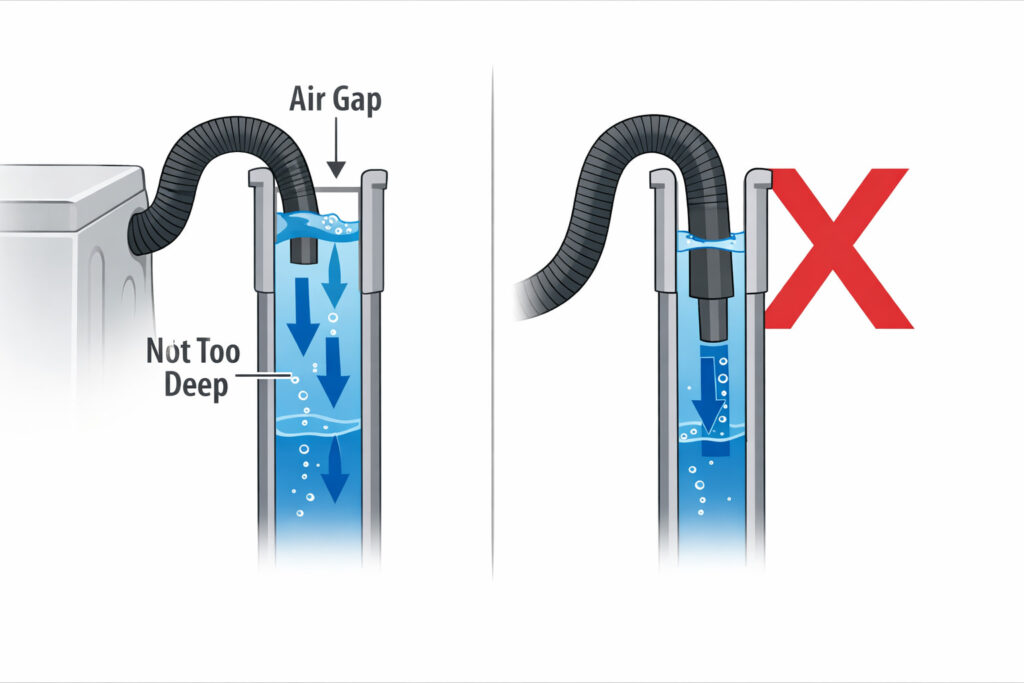
A surge of discharge water can trigger odor release if there’s a trap/vent problem, partial blockage, or compromised seal.
Safe actions you can take:
- Confirm the drain hose is securely positioned in the standpipe (not taped airtight; it needs an air gap to drain properly in many setups).
- Make sure the drain hose isn’t shoved too far down into the standpipe. If it’s inserted too deep or sealed tight, it can contribute to poor draining, siphoning issues, or odor blowback in some setups. Secure it the way your washer installation instructions show.
- Clean the washer-side buildup steps above (because residue can amplify odors during discharge).
If the odor persists, professional diagnosis is the right move—especially if you suspect venting problems or a hidden leak.
This Ask This Old House video explains (visually) how plumbing traps can lose their water seal, which is a common reason sewage odors show up near drains.
What NOT to do (common mistakes)
- Don’t mix cleaning chemicals (especially bleach with anything else). Use one product at a time and ventilate.
- Don’t pour random cleaners into the washer unless your manufacturer explicitly allows it for the clean cycle.
- Don’t ignore a strong sewer odor that seems to be worsening or coming from behind walls/floors.
Troubleshooting cheat sheet (fast)
Smell pattern → Likely cause → Best next step
- Smell in drum/door area → washer buildup → Run Clean Washer/Tub Clean cycle + clean gasket/dispenser
- Smell at standpipe/floor drain → sewer gas entry → restore trap water (if applicable) + inspect for leaks
- Smell bursts during drain/spin → drain/vent issue → secure hose placement + plumber if persistent
- Harsh chemical odor → cleaning product issue → ventilate + stop mixing products
FAQs
Why does my washer smell like sewage even after I cleaned it?
If the smell returns quickly, it’s often either (1) residue in hidden areas like the gasket folds or dispenser housing, or (2) sewer gas entering from the laundry drain. Re-check where the smell is strongest—drum vs. drain area—before repeating cleaning steps.
Can sewer gas come up through a washing machine?
The washer itself isn’t usually the source of sewer gas, but sewer odors can enter the laundry room through the standpipe/floor drain area and make it seem like the washer is the culprit—especially during draining/spin cycles.
Is it safe to use bleach to remove washer odors?
Some manufacturers allow chlorine bleach for certain cleaning cycles, and others prefer different cleaners. Use only what your washer’s manual or official brand instructions permit, and follow the ventilation/safety guidance in CDC bleach instructions.
Why is the smell worse during the spin cycle?
During spin/drain, the washer pumps a large volume of water into the standpipe quickly. If the drain setup has a venting/trap problem or a partial blockage, odors can “puff” out right then.
How do I keep the smell from coming back?
Run the washer’s clean cycle on the schedule your manufacturer recommends, keep the door/lid cracked open to dry, wipe moisture from gasket folds, and keep the dispenser area clean and dry.
When should I call a plumber for a sewage smell?
Call a plumber if the odor is strongest at the drain area, persists after basic checks, seems to come from behind walls/floors, or you see signs of leaking wastewater or moisture damage.
Conclusion
A washer that smells like sewage usually needs one of two fixes: clean the washer’s interior buildup or address sewer odors at the laundry drain. Start by locating where the smell is strongest, follow the safe steps above, and call a pro promptly if the odor is persistent, hidden, or linked to leaks.