

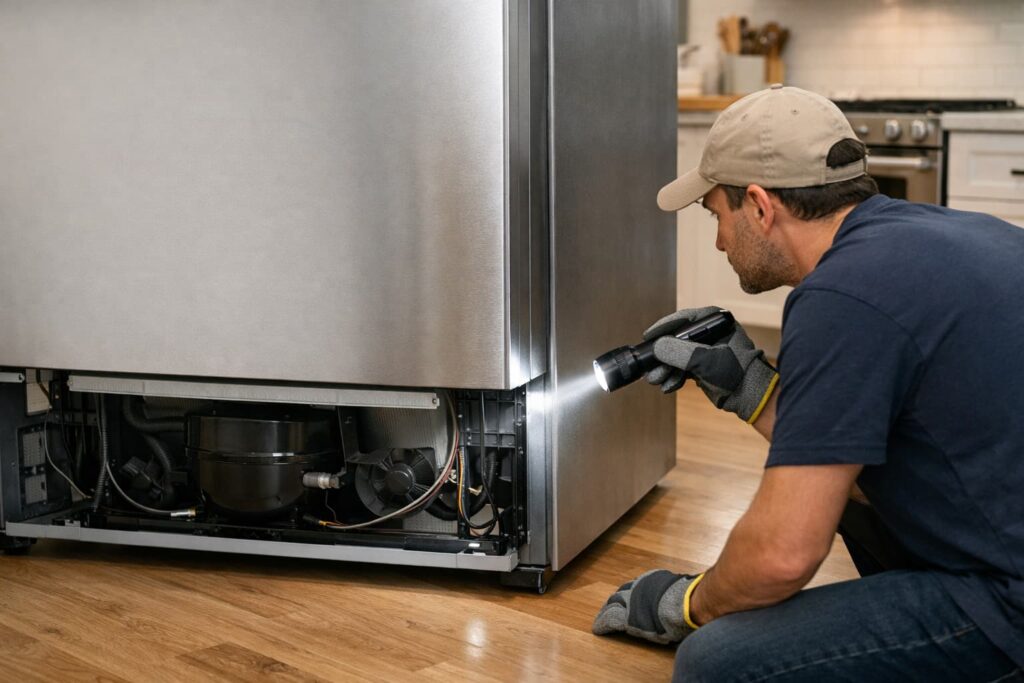
A refrigerator making loud buzzing noise is often caused by the ice maker/water valve filling, a fan issue (sometimes ice-related), or vibration from leveling/contact points—and you can usually narrow it down with a few safe checks. (GE Appliances)
If the sound is new, getting louder, or paired with warning signs (burning smell, smoke, sparks, breaker trips), skip DIY and go straight to the safety section. (Whirlpool)
Quick Checks First
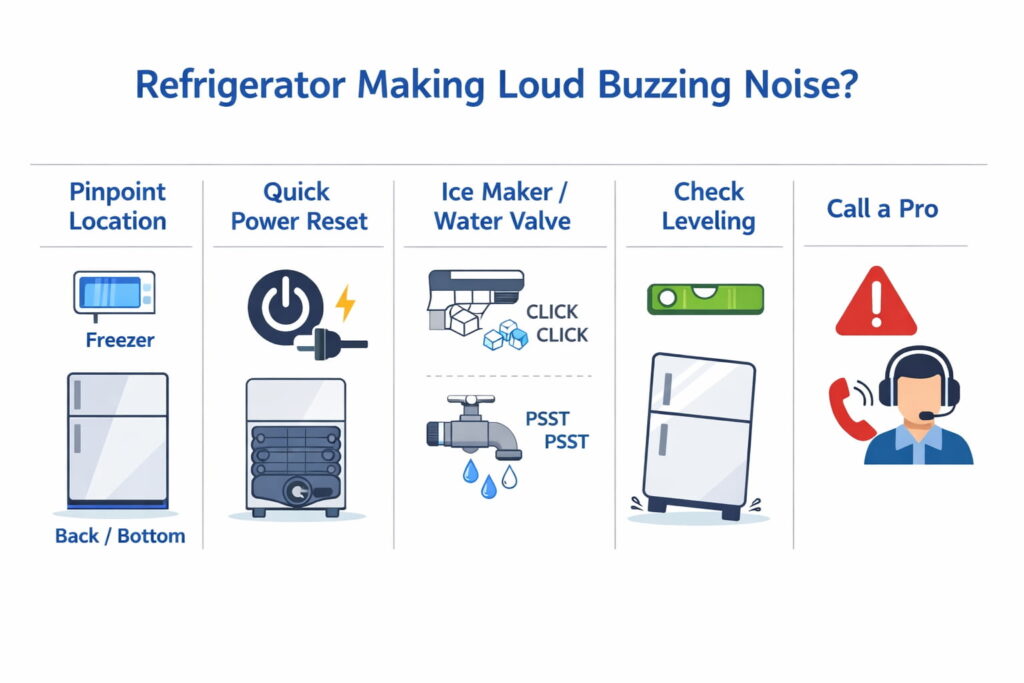
- Pinpoint the location: freezer/inside vs back/bottom. (Samsung)
1A) Quick power reset (safe): If the buzzing started after a power outage or surge, unplug the refrigerator (or switch it off at the breaker) for about 5 minutes, then restore power and listen for changes. If you smell burning, see sparks, or the breaker trips again, stop and call a pro. - Short buzzing bursts often point to ice maker/water valve filling (commonly normal). (GE Appliances)
- No water line connected? Turn the ice maker OFF. (Samsung)
- Vibration buzz? Check leveling + contact points (wall/cabinets/objects). (Frigidaire)
- Loud, persistent, or worsening noise = stop and contact service. (Whirlpool)
Safety First: Stop and Call a Pro If You Notice Any of These
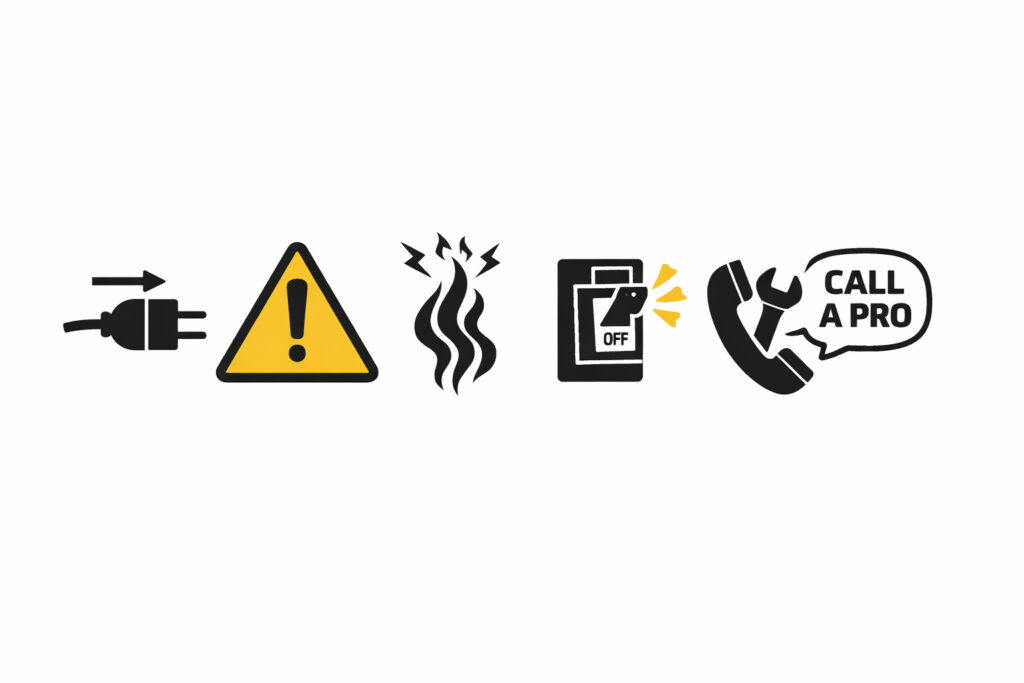
Stop troubleshooting and get professional help if you notice:
- Burning smell, smoke, sparks, or melted plastic
- Repeated breaker trips
- Visible wire damage
- Buzzing that gets suddenly much louder and doesn’t stop
If buzzing becomes a loud refrigerator noise, Whirlpool recommends contacting a certified technician to determine if there’s a problem. (Whirlpool)
What “Buzzing” Usually Means (And Why It Can Be Normal)
A common “buzzing” sound is the water inlet valve opening briefly to send water to the ice maker or dispenser. (GE Appliances)
Frigidaire also lists “Buzzing → Water Valve” as a typical explanation when the valve opens to fill the ice maker. (Frigidaire)
This Samsung video helps viewers compare common refrigerator sounds and separate “normal operation” from “time to call for service.”
This Frigidaire video is useful for readers who aren’t sure which everyday refrigerator sounds are expected.
Before You Start: What You’ll Need
- Flashlight
- Phone (to record the sound and note timing)
- Soft cloth (for minor vibration checks)
- A second person (optional—helps you listen while someone opens doors or uses the dispenser)
No special tools are required for the checks below.
Step 1: Find Where the Buzzing Is Loudest
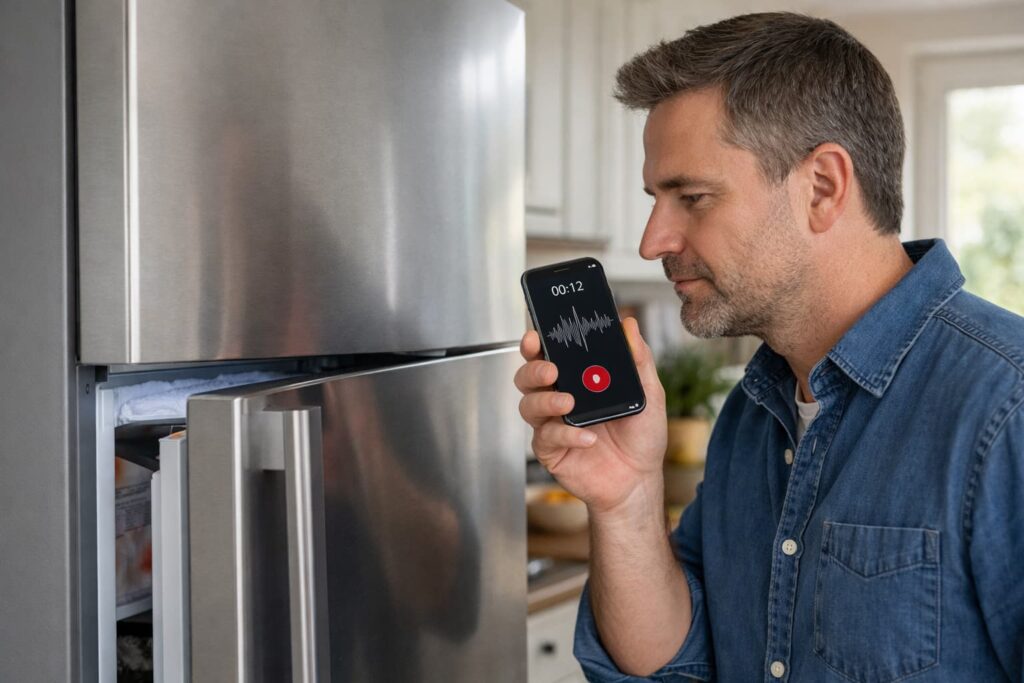
Stand in three spots while the noise happens:
- Inside/freezer area (ice maker, fan)
- Fresh-food section (airflow noises)
- Back/bottom (compressor hum, vibration)
Samsung’s noise guidance focuses on identifying what you’re hearing and where it’s coming from. (Samsung)
Fix 1: If the Buzzing Happens in Short Bursts, Check the Ice Maker/Water Fill
Best clue: short buzzing that comes and goes (often tied to ice production or water dispensing).
GE explains that when the ice maker fills, the water valve can make a buzzing/humming sound, and you may also hear valve buzzing when dispensing water. (GE Appliances)
What to do (safe):
- Listen for whether it aligns with ice making or water dispensing. (GE Appliances)
- If it’s brief and not worsening, it may be normal for your model. (GE Appliances)
This GE Appliances video helps readers understand ice maker behavior and basic troubleshooting when noises line up with ice production.
Fix 2: If You’re Not Connected to a Water Line, Turn the Ice Maker OFF
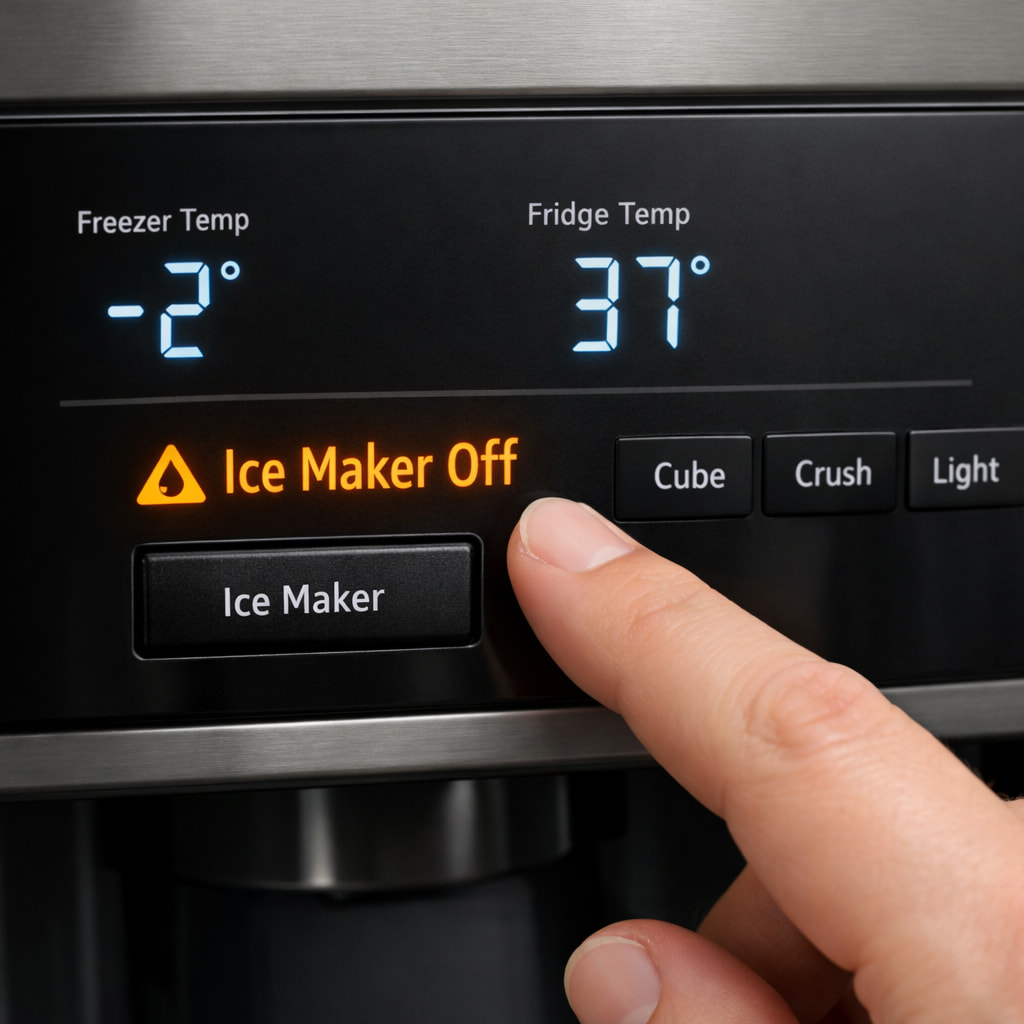
If your refrigerator’s ice maker is ON but the fridge isn’t connected to water, the unit may still try to fill and create noise. (Samsung)
What to do (safe):
- Confirm whether a water line is connected.
- If not connected, switch the ice maker OFF and see if the buzzing stops after the next cycle window. (Samsung)
Fix 3: If the Buzzing Seems Like a Fan Noise, Check for Ice/Frost Interference
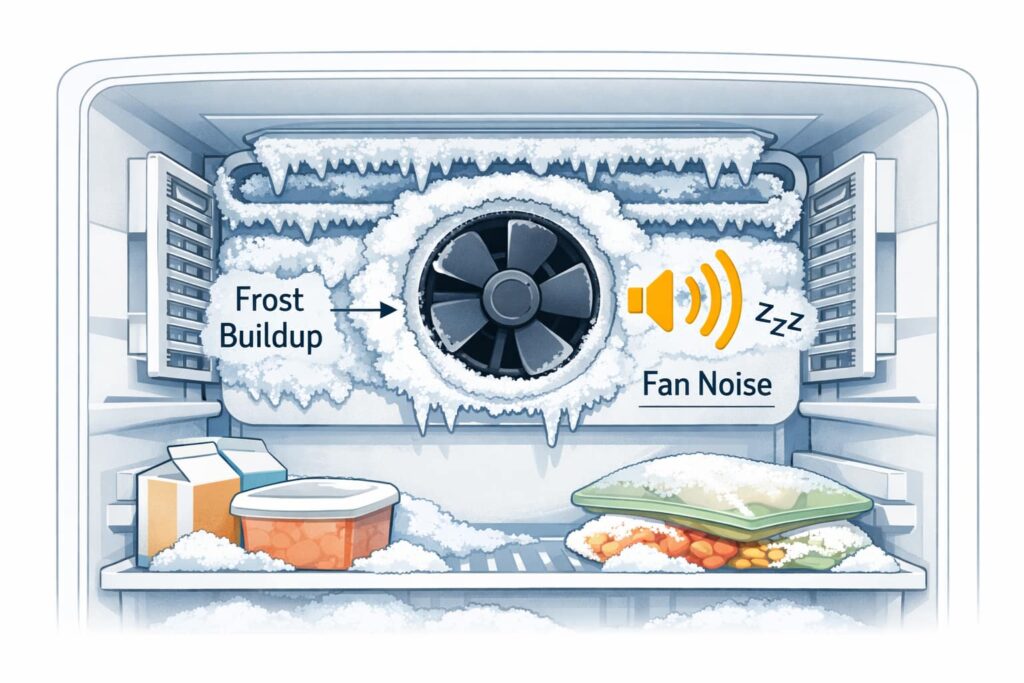
A fan that’s rubbing against frost/ice can sound like buzzing, humming, or a loud vibration-like noise. (Samsung)
Quick check: Open the freezer door while the buzzing is happening. If the sound stops immediately (or changes a lot), the noise is more likely tied to a fan/airflow component that pauses or changes behavior when the door is open. If your model has a door switch, press it gently with your finger (don’t force it) to see whether the sound returns when the switch is engaged.
What to do (safe):
- If you suspect ice buildup, use manufacturer guidance to defrost safely and avoid sharp tools or chipping ice. (Samsung)
- If the sound changes after a defrost period or door openings, note that—it helps diagnosis. (Samsung)
Stop & call a pro if you can’t address the issue without disassembly beyond basic user-access areas, or if the noise returns quickly after safe defrost steps. (Whirlpool)
This Samsung-labeled video can help readers recognize fan-type noise patterns and decide what’s safe to check vs. when to stop.
Fix 4: If It’s a Steady Hum/Buzz from the Back/Bottom, It May Be the Compressor (Often Normal)
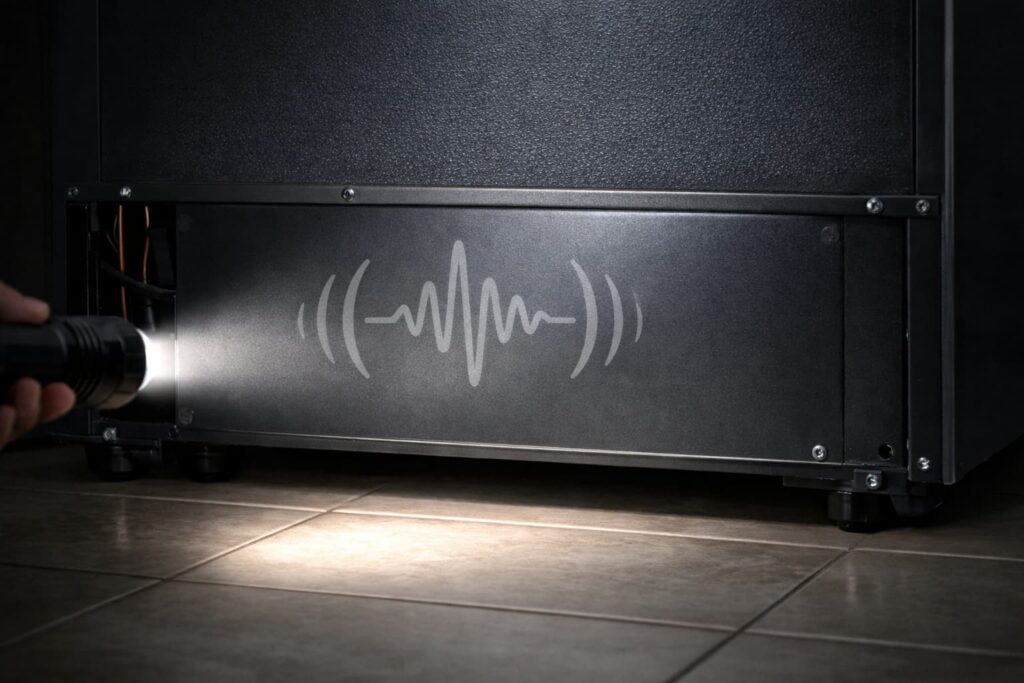
Frigidaire notes that modern, high-efficiency compressors can produce a high-pitched hum or pulsating sound during operation. (Frigidaire)
Whirlpool also notes buzzing can occur as the compressor or fans adjust to optimize performance, but loud or abnormal noise should be evaluated. (Whirlpool)
Easy maintenance check: Dust buildup around the lower front grille/toe-kick or rear lower area can make the fridge work harder and sound louder. With power unplugged, use a vacuum with a soft brush to gently clean accessible vents/grilles. Do not remove panels or reach into wiring/parts—if cleaning requires disassembly, stop and call a technician.
What to do (safe):
- Ensure the fridge isn’t pressed tightly against the wall or cabinets (follow your manual’s clearance guidance).
- If the buzz is new, much louder than usual, or persistent, treat it as a “call a pro” situation. (Whirlpool)
Fix 5: Reduce Vibration: Check Leveling and “Contact Points”
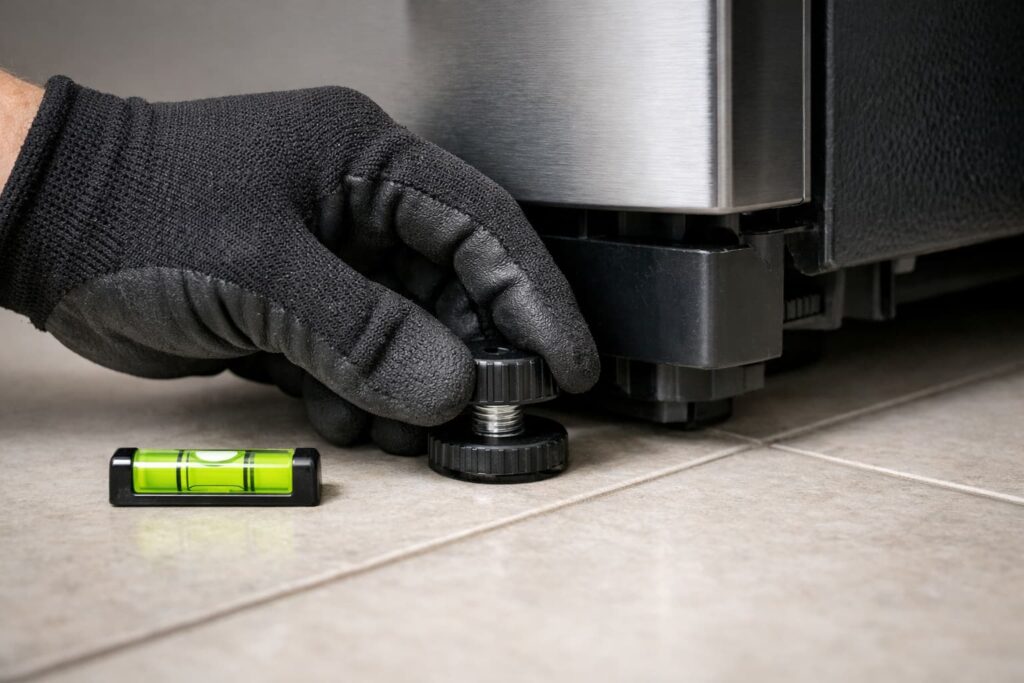
A lot of “buzzing” is actually vibration transferring into cabinets, walls, or items. (Frigidaire)
Also check: If your fridge has a water line, make sure the line isn’t tapping the back of the refrigerator or the wall. A lightly vibrating line can create a loud buzzing effect. If you can safely access it, gently reposition the line so it doesn’t touch hard surfaces. Do not kink the line or disturb shutoff valves.
What to do (safe):
- If safe, pull the fridge forward slightly and ensure it’s not touching the wall.
- Remove or reposition items that can vibrate (decor on top, bottles touching, nearby pans).
- If your model has adjustable leveling feet, confirm it sits stable without rocking.
If stabilizing/leveling reduces the sound immediately, vibration was likely the main issue. (Frigidaire)
Fix 6: Rule Out Simple Rattles Near the Bottom Area (No Panel Removal)
Some refrigerators have water-related and drain-pan related sounds that can be mistaken for “buzzing,” and vibration can amplify them. (Frigidaire)
What to do (safe):
- Look around the lower front/back area without removing panels.
- Move anything obvious that’s touching the fridge (cords, tubing, items behind it).
If anything appears damaged, loose, or would require removing covers, stop and contact service. (Whirlpool)
Fix 7: If Buzzing Happens When Dispensing Water, It May Still Be the Water Valve
GE notes you may hear the water valve buzz when using refrigerators with an internal or external water dispenser. (GE Appliances)
What to do (safe):
- Dispense water briefly and listen—does it match the same buzz you hear at other times? (GE Appliances)
- If the sound becomes unusually loud or changes abruptly, stop and contact a technician. (Whirlpool)
Fix 8: Don’t Confuse “Normal Operation” With a Problem
Whirlpool notes buzzing can occur when components adjust during normal operation. (Whirlpool)
Samsung provides guidance to help distinguish expected sounds from unusual ones. (Samsung)
What to do (safe):
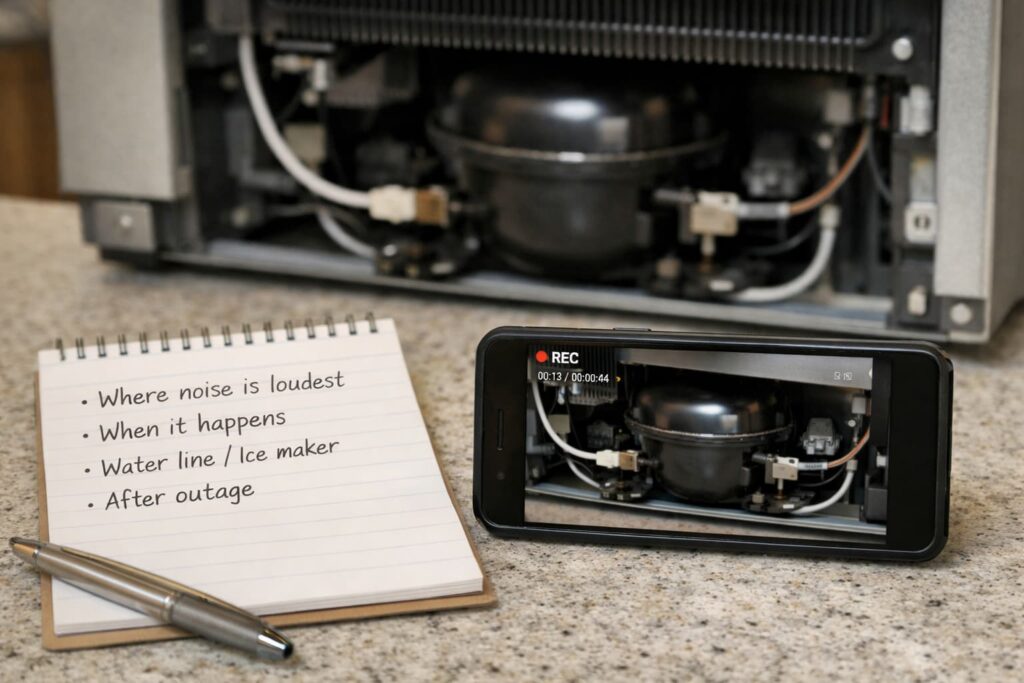
- Record a 10–15 second clip when the sound is loudest.
- Note: time of day, whether doors were opened recently, and whether the ice maker was active.
This Repair & Replace video is helpful for a safe “where is the noise coming from?” walkthrough before anyone jumps to parts.
Fix 9: Know When to Stop DIY and Call for Service
Even if many buzzing sounds are normal, you should escalate when it’s loud, persistent, or worsening. (Whirlpool)
Call for service if:
- The buzzing is continuous and doesn’t cycle off
- It suddenly gets louder than usual
- Cooling performance changes (food warming, ice melting)
- You notice new warm spots, the fridge/freezer can’t hold temperature, or doors don’t seal well (noise plus poor cooling often signals a larger issue)
- You notice any electrical warning signs (smell/sparks/burn marks)
This Repair & Replace video is most useful at the “service/diagnosis” stage to understand what a technician may check for water-valve-related issues.
Quick Diagnosis Table: What You Hear vs What to Check
| What you notice | Most likely area | First safe check |
|---|---|---|
| Short buzzing bursts, especially around ice cycles | Ice maker / water valve | Listen for timing with ice maker fill. (GE Appliances) |
| Buzzing and no water line connected | Water valve trying to fill | Turn ice maker OFF. (Samsung) |
| Fan-like buzzing/hum that seems freezer-related | Fan area (possible ice interference) | Follow safe defrost guidance from the manufacturer. (Samsung) |
| Steady hum/buzz from back/bottom | Compressor/fans/vibration | If loud or worsening, contact a certified technician. (Whirlpool) |
FAQs
1) Is a refrigerator making loud buzzing noise always a bad sign?
Not always—GE and Frigidaire both describe buzzing tied to the water valve filling the ice maker as a common explanation. (GE Appliances)
2) Why does my refrigerator buzz every so often?
If you have an ice maker, brief buzzing can occur during water fills as part of normal operation. (GE Appliances)
3) My fridge buzzes but it isn’t hooked up to water—what should I do?
Turn the ice maker off—Samsung warns that if you do not have a water line connected, you should turn off the ice maker. (Samsung)
4) When should I worry about a buzzing noise?
If the buzzing becomes loud, changes noticeably, or doesn’t cycle normally, Whirlpool recommends contacting a certified technician to determine if there’s a problem. (Whirlpool)
5) Is a buzzing refrigerator noise dangerous?
Buzzing is often harmless, especially if it happens briefly during ice maker fills or normal operation. It becomes a safety concern if it’s paired with burning smells, smoke, sparks, repeated breaker trips, or visible wiring damage—in those cases, stop troubleshooting and contact a professional right away.
5) Could the compressor be causing the buzzing?
Yes—Frigidaire notes modern compressors can make a high-pitched hum or pulsating sound during operation, and Whirlpool notes buzzing can occur as the unit adjusts performance. (Frigidaire)
6) What’s the safest first step if I’m not sure what the noise is?
Start by identifying where it’s loudest and whether it aligns with ice making or water dispensing, then record a short clip for support if needed. (Samsung)
Conclusion
A refrigerator making loud buzzing noise is often something explainable—like the ice maker fill valve, fan-related noise, or vibration—but loud and worsening is your cue to stop guessing and escalate. (Whirlpool)
If you want to troubleshoot faster, note where the sound is loudest (freezer/inside vs back/bottom) and whether your fridge is connected to a water line—those two details usually point to the right fix first. (Samsung)